California water heater repair, installation and replacementResidential and commercial service
Water Heater Repair CAWater heater service for California homes and businesses
Need help with a water heater?(800) 370-2296Call Our Team
VALVES · PIPE CONNECTIONS · DRAIN LINES · TANK ASSESSMENT

Water Heater Leak Repair in California

Water pooling near your heater could come from a supply fitting, drain valve, pressure relief discharge or the tank itself. Our licensed plumbing professionals investigate water heater leaks across covered California communities and explain what may be repaired. If the storage tank shell has failed, replacement is usually necessary. Tell us where you see the water so we can discuss a safe next step. Same-day appointments may be available for leaking water heater assessment, depending on your address and current schedule; active electrical or gas hazards need immediate safety action.

Gas odor or a carbon monoxide alarm? Evacuate and contact emergency services from a safe location instead of using this form.

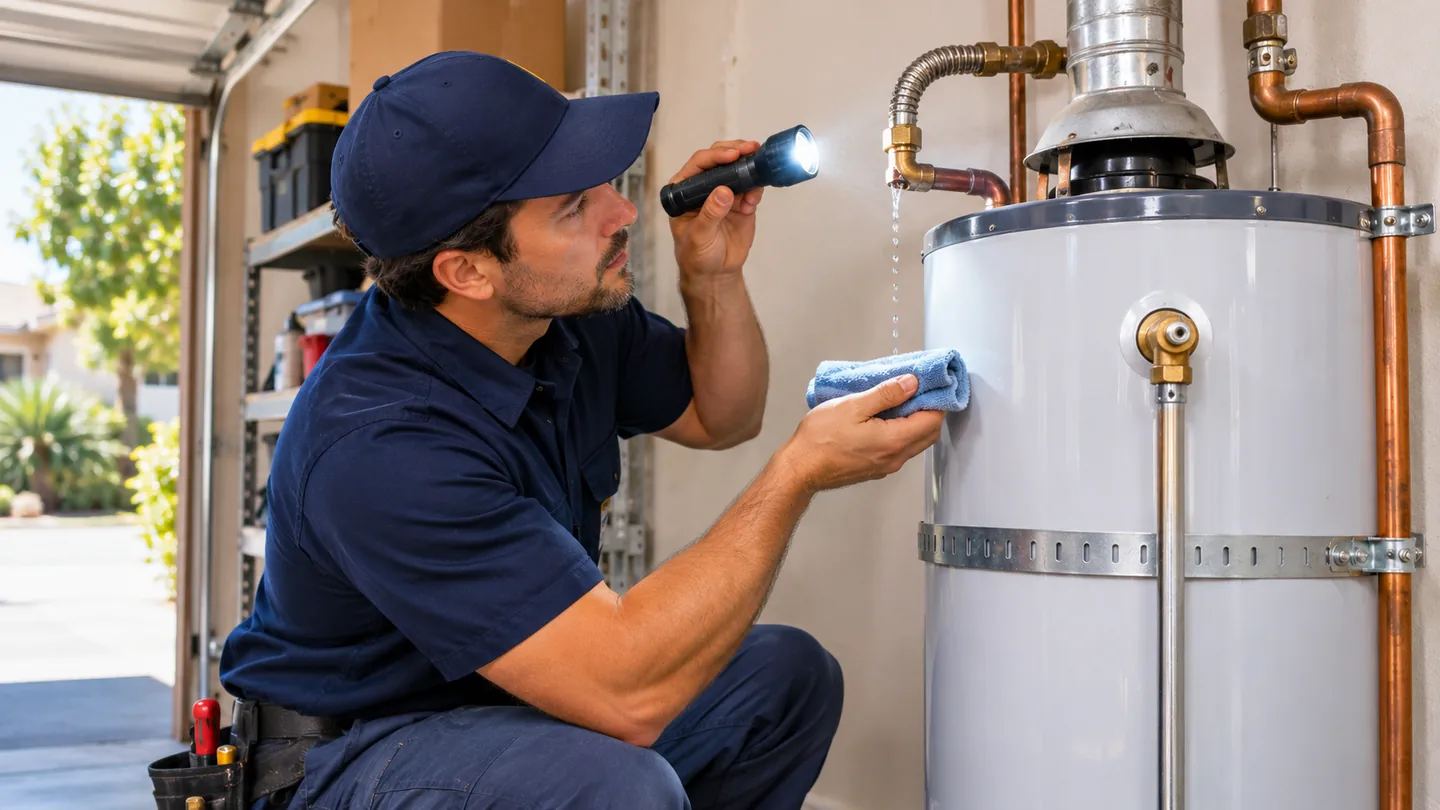
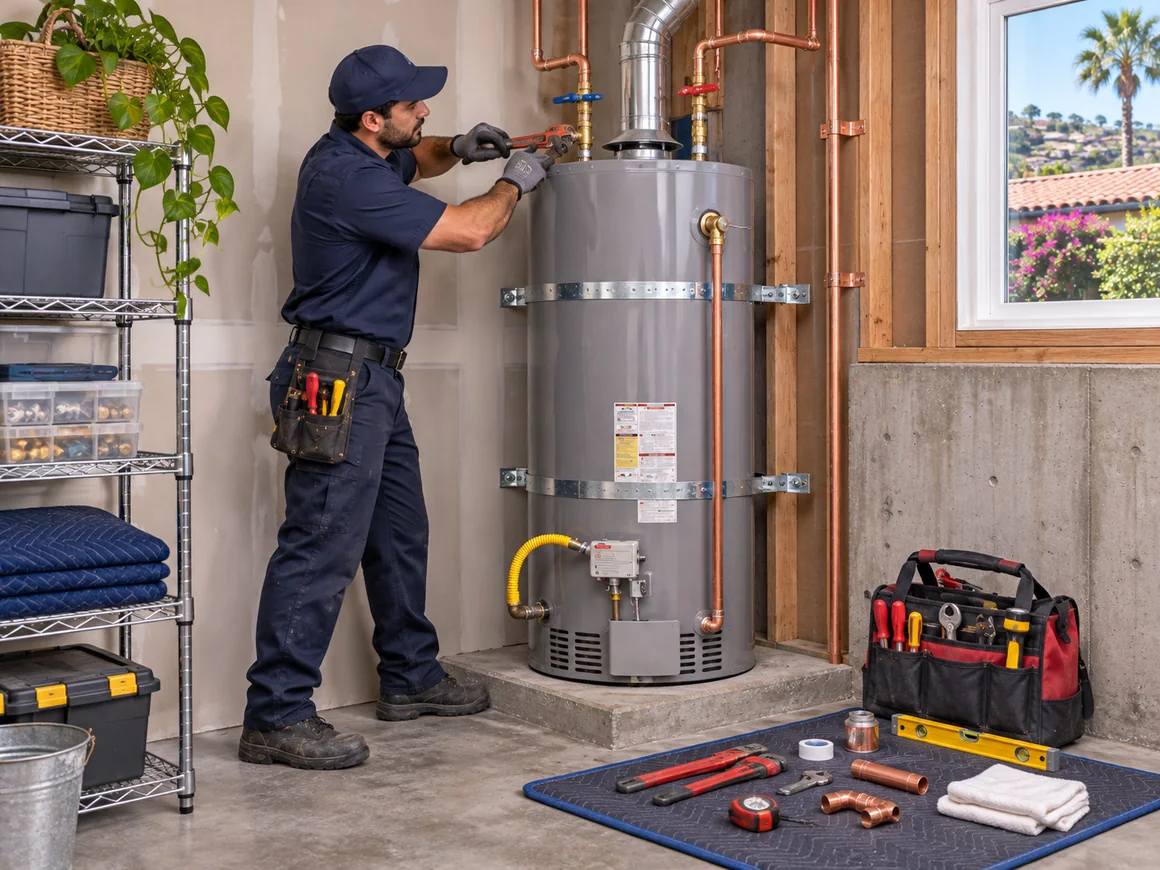
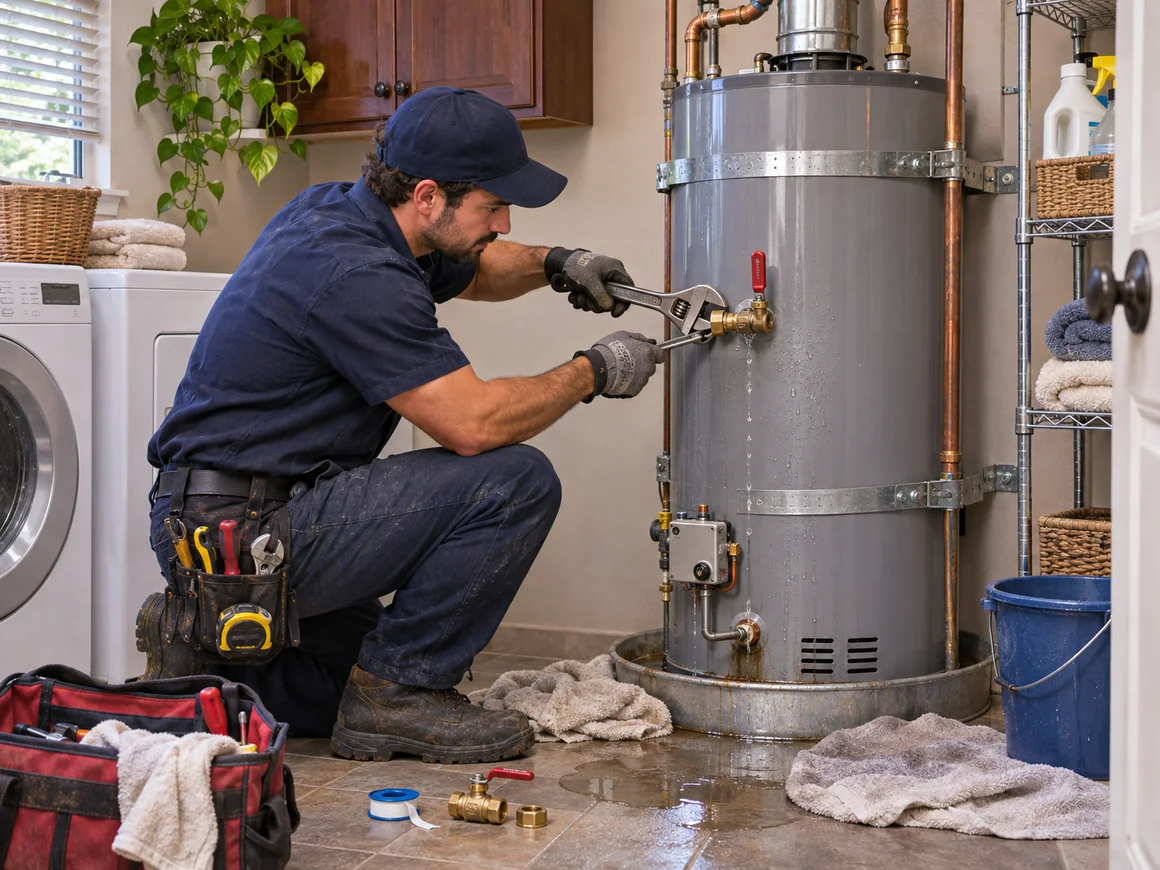
Plumbing professional inspecting water heater water-line connections for a leak
Licensed Plumbing Professionals
Insured Service Professionals
Leak-Source Assessment
Residential & Commercial

What Should You Do If Your Water Heater Is Leaking?

An active leak deserves attention, but not every situation is safe to approach. Keep people clear first, then choose the right response for the hazard you can see or smell.

Move People Away from Hot Water and Electrical Hazards

Hot water from a relief discharge or broken connection may cause burns. Keep everyone away from standing water near outlets, electrical panels or powered equipment. Never reach through water to operate switches or disconnects.

Reduce Further Water Damage Only If It Is Safe

If you can do so without contacting hot water or electrical equipment, keep the area clear and follow the specific heater manual. A qualified professional can advise on any needed isolation. Do not guess at fuel, valve or power controls on a damaged system.

Gas Smell or Carbon Monoxide Alarm Requires Emergency Action

A water leak is different from a natural-gas leak. If gas is suspected, or a carbon monoxide alarm sounds, evacuate immediately. From a safe location, call 911 and the appropriate gas utility. Do not operate switches, lights or phones while inside the suspected gas area.

Contact a Professional with the Visible Leak Location

If it is safe to observe from a distance, note whether water appears at the top, base, valve or surrounding pipes. Share your California city, heater type and brand or model if readily known. There is no need to disassemble a pressurized heater or approach a hazard.

Immediate emergency: For suspected natural gas or carbon monoxide, leave the building and call 911 and the gas utility from a safe location. Do not use this water-leak contact form instead of emergency help.

Where Is the Water Coming From?

Start by noticing where water shows up, not by assuming that spot is the actual failure. A technician traces the source before deciding between a fitting repair and replacement. Water running down the heater jacket can make a repairable upper connection look like a failed tank bottom. Finding the source comes before choosing a repair.

Water Leaking from the Top of the Heater

Water near the hot or cold supply connection may indicate a loose or deteriorating flex line, nipple or other fitting. A drip from higher plumbing can also track down the tank jacket.

Water Leaking from the Bottom or Under the Tank

Water beneath the base could come from an upper fitting, drain valve, nearby pipe or the tank shell. A puddle alone does not prove that the storage tank has failed.

Water Leaking from the Side of the Water Heater

Possible sources include the temperature and pressure relief assembly or a water-line connection. Some electric models can also leak around a heating-element gasket.

Water in the Drain Pan or Around the Floor

The pan collects water but does not identify where it originated. Nearby plumbing, condensation or water traveling along an outer jacket can mislead a visual diagnosis.

Where do you first see the water?Observation guide, not a diagnosis
ABC
A · TopSupply connectors and nearby pipes
B · SideRelief assembly or applicable component seals
C · Base / panDrain valve, tracked water or tank damage
Moisture can travel before it becomes visible. Only an inspection can confirm its source.

Which Water Heater Leaks Can Often Be Repaired?

Many visible leaks involve an external serviceable part, not a broken tank shell. The correct repair depends on source verification, compatible materials and a check for damage around the component.

Hot and Cold Water Supply Fittings and Connectors

Accessible water supply connectors, threaded fittings and short pipe sections can sometimes be repaired or replaced. The condition of nearby tank threads and water lines determines whether that work is appropriate.

Water Heater Drain Valve Leaks

Water escaping through a drain valve is different from a corroded tank bottom. A faulty valve may be replaceable, but the connection must be assessed first. Never remove a drain valve from a hot, pressurized heater.

Heater Element Gaskets and Accessible Seals

On applicable electric storage tanks, a worn heating-element gasket may allow water to escape. Repair requires appropriate isolation of power and water, inspection for corrosion and model-compatible parts.

Temperature and Pressure Relief Valve Connections

Moisture around a relief valve’s threaded connection can have a different cause than hot water being released through its discharge pipe. The discharge must be evaluated separately for pressure or temperature issues.

Associated Water Lines and Isolation Valves

An adjacent shutoff valve or line may be the source rather than the heater itself. Explain the actual location when calling; the appropriate scope and availability of nearby plumbing repairs must be confirmed.

A leak at a fitting is not the same as a failed tank.

Describe the leak and the type of heater. Our team can discuss inspection and the likely scope without promising that every leak is repairable.

Call About Leak Repair

Water Heater Temperature and Pressure Relief Valve Leaks

A drip from a temperature-and-pressure (T&P) relief pipe calls for a different assessment than a loose supply fitting. A qualified professional must determine whether the valve is releasing water for a safety reason.

What the T&P Relief Valve Protects Against

The temperature and pressure relief valve is a critical safety device intended to open when specified temperature or pressure limits are reached. Its discharge line is part of that protection.

Dripping from the Discharge Pipe vs. a Connection

Water released at the discharge-pipe end can mean the valve has actuated. Moisture at a threaded connection may instead indicate a connection problem. The source and pattern change the diagnosis.

Thermal Expansion, High Pressure or Overheating

In a closed plumbing system, heated water can raise pressure. Excess supply pressure, a faulty control or an unsuitable relief component may also need assessment. Replacing a dripping valve without addressing the cause may not resolve the problem.

Why the Discharge Pipe Must Never Be Capped

Never cap, plug, clamp or block the relief discharge. Doing so removes a safety pathway and can create a dangerous pressure condition. Do not attempt to bypass or test a malfunctioning safety valve yourself.

A. O. Smith Technical Bulletin 52 distinguishes intermittent discharge, connection leakage and tank-mounted weld failures. Exact diagnosis depends on the heater and plumbing system.

Can a Leaking Water Heater Tank Be Repaired or Must It Be Replaced?

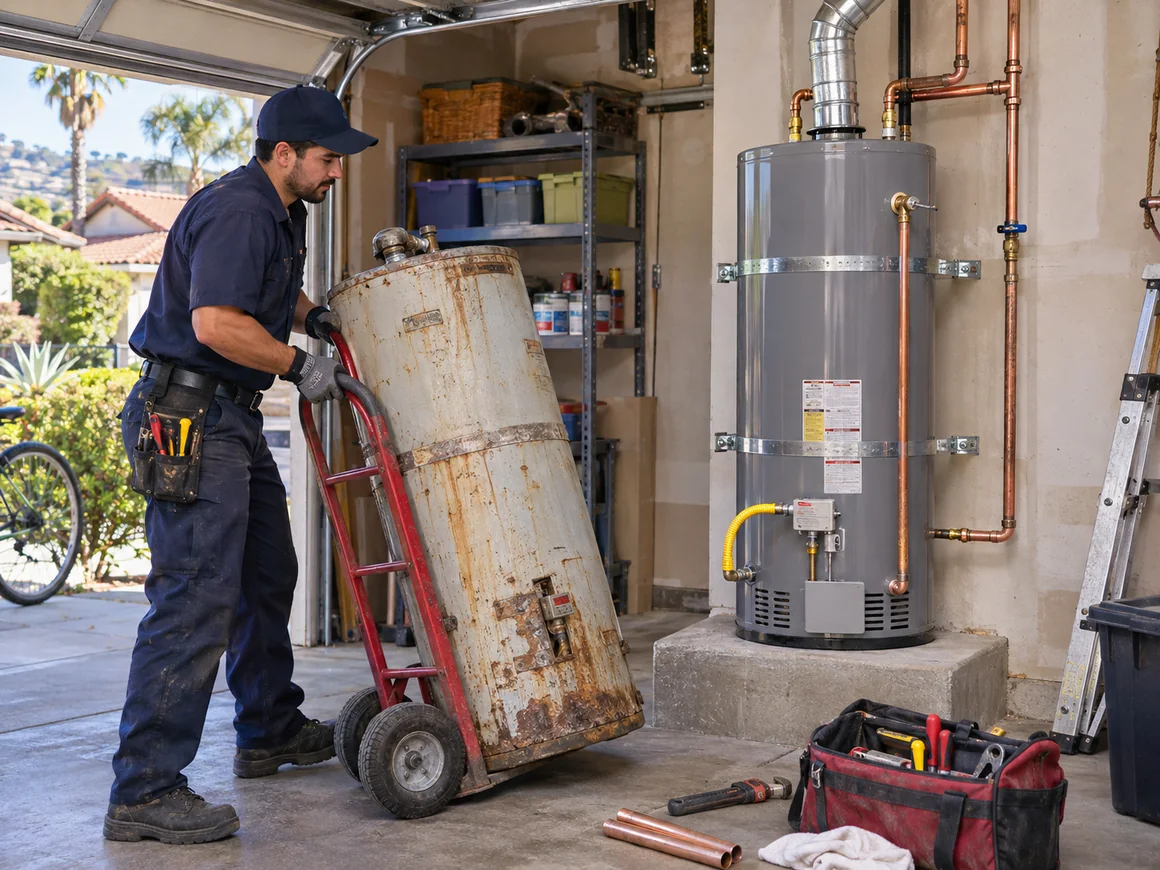
Finding water below a heater is not enough evidence to recommend a new one. But once the tank shell itself is confirmed to leak, replacing the heater is generally the appropriate remedy.

The Difference Between a Tank Leak and External Leakage

An external connector can drip onto the outer jacket and emerge underneath. A technician must rule out nearby fittings and lines before identifying the steel tank shell as the source.

Corrosion, Tank-Shell Failure and Serious Damage

A confirmed leak through a storage tank shell or welded tank connection generally means the heater must be replaced. Patching or welding a compromised pressure vessel is not a routine fitting repair.

When a Component Repair Is the More Appropriate Option

A replaceable valve, fitting or gasket may justify targeted service when the surrounding connections and tank are sound. Repair recommendations should be tied to the confirmed failure.

How Age, Condition and Work Scope Affect the Decision

Aged connections, repeated leakage, severe corrosion, access and compatible parts all influence whether repairs make sense. Avoid relying on age alone or a universal dollar threshold.

Component repair may be appropriate

Leak traced to a serviceable connector, valve or gasket with sound surrounding material. Confirm the diagnosis and proposed parts before approving work.

Ask About Leak Repair

Tank replacement is usually necessary

Leak confirmed through the storage tank shell, welded connection or major corrosion. A replacement assessment addresses the failed pressure vessel.

Explore Water Heater Replacement

Can Leaks in a Tankless Water Heater Be Repaired?

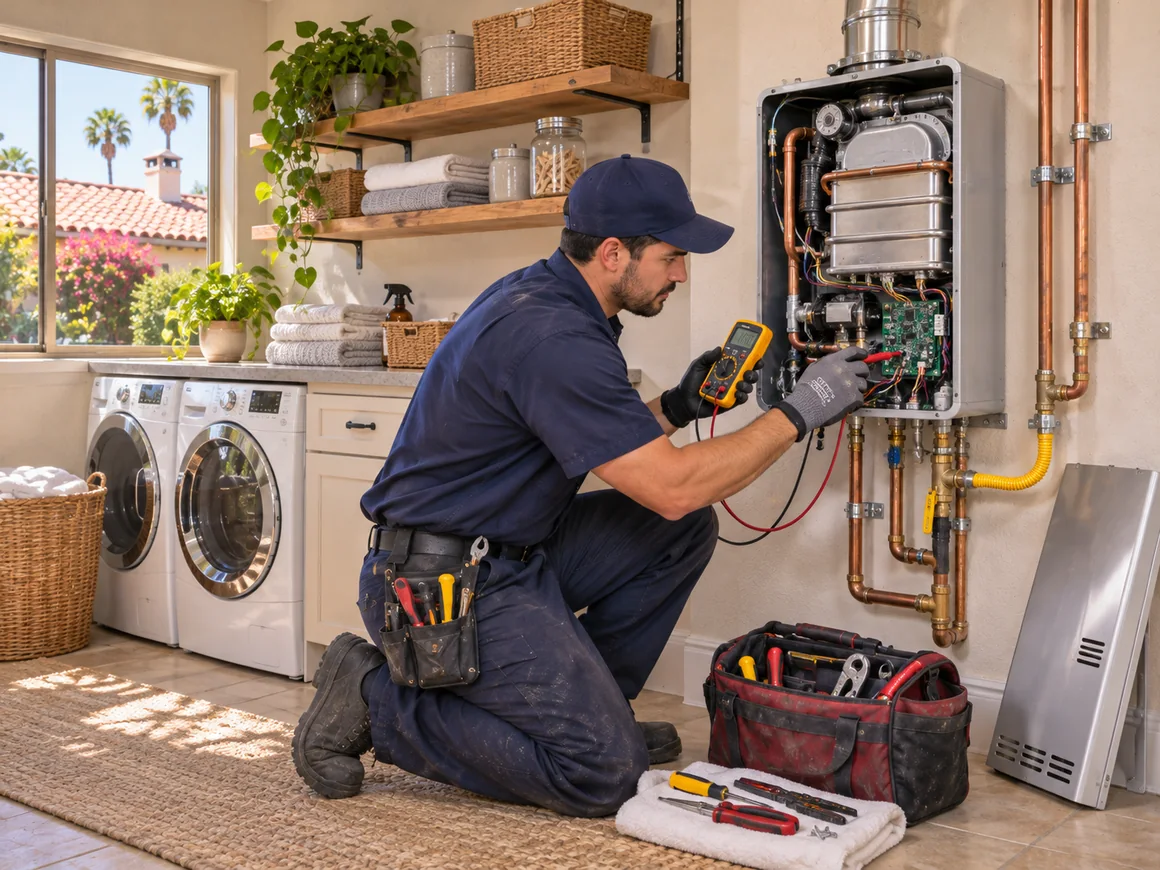
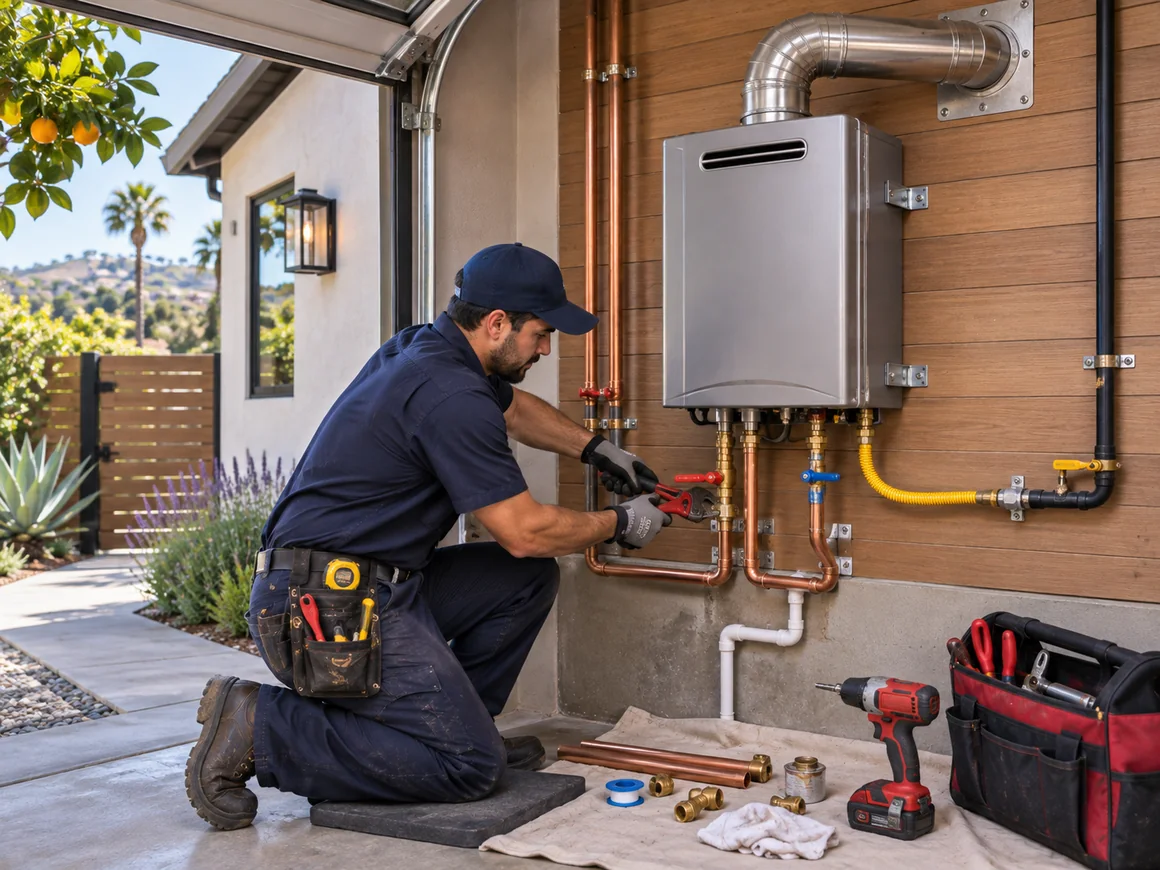
Tankless systems use different plumbing and internal components than storage heaters. A damp wall-mounted unit may have an external connection issue, a condensate problem on applicable models or an internal water-side failure.

Supply, Outlet and Service Connection Leaks

Tankless units have inlet, outlet and service connections. External seals or fittings can sometimes be serviced once the unit and its piping have been assessed for damage.

Condensate Drainage on Applicable Models

Some condensing tankless models have a condensate drain. A blocked, disconnected or damaged condensate line is not the same as a leaking water supply or heat exchanger.

Internal Component or Heat Exchanger Leakage

Water inside the unit can affect electrical components and may involve an expensive or model-specific failure. A manufacturer-compatible professional assessment determines whether repair or replacement is realistic.

Tankless Leakage Versus a Diagnostic Error Code

An ignition code or fluctuating hot water without visible escaped water is primarily a malfunction question. For those problems, see Tankless Water Heater Repair.

Technician using a flashlight to inspect a dripping water heater pipe fitting

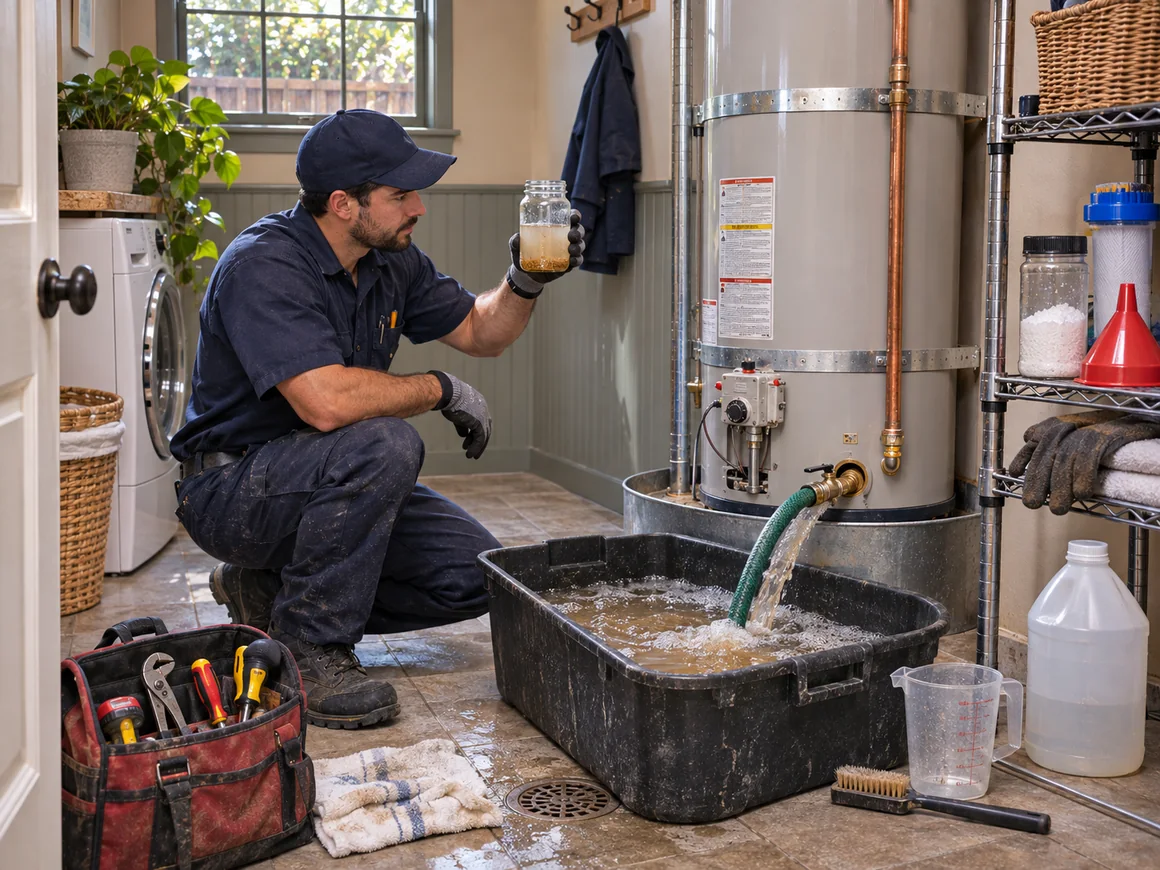
Why tracing the leak first matters

Water near a connection does not necessarily originate there, and water around a tankless enclosure should not be investigated by opening an energized unit. Share visible symptoms and let a qualified technician identify the actual source.

Brand/model compatibility, the equipment’s condition and safe access determine the repair scope.

Is the Water Heater Actually Leaking?

Moisture around a heater deserves attention, but its presence alone does not establish where the fault is. A good inspection separates a true water-side leak from water arriving by another path.

Condensation That Looks Like a Leak

Under some operating conditions, particularly on certain gas storage models, moisture can condense on cooler surfaces. Persistent puddles, corrosion or repeated moisture still require inspection rather than an assumption of normal condensation.

Water Tracking Down the Tank Jacket

A fitting above the tank can drip into insulation or along the exterior. The water may become visible far below its actual entry point. A bottom puddle is only a clue.

Nearby Pipes, Drain Pans and Other Water Sources

Leakage from unrelated plumbing, a drain line or even another appliance may collect near the water heater. Inspection should identify whether the heater, associated lines or a separate source is responsible.

How Are Gas and Electric Water Heater Leaks Evaluated?

Water leaks can affect gas or electric heaters, but the hazards and serviceable parts are not identical. We focus on the water source while separating combustion and electrical safety concerns.

Leaks Around Gas Water Heater Connections and Components

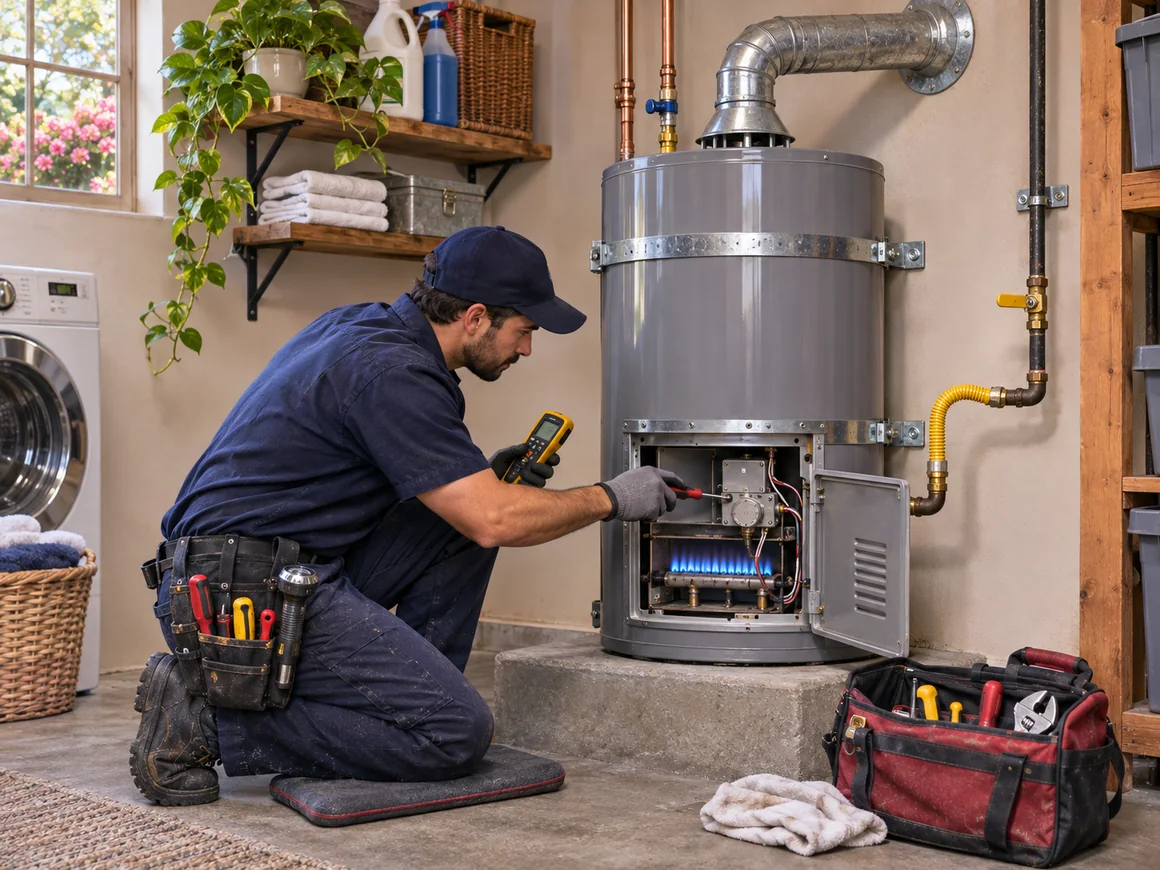
A gas-fired storage heater still has ordinary hot/cold water fittings, a relief assembly and drain valve that may leak water. Natural gas odor is a separate emergency: leave the area and call the utility or 911 from safety.

Leaks Around Electric Water Heater Elements and Connections

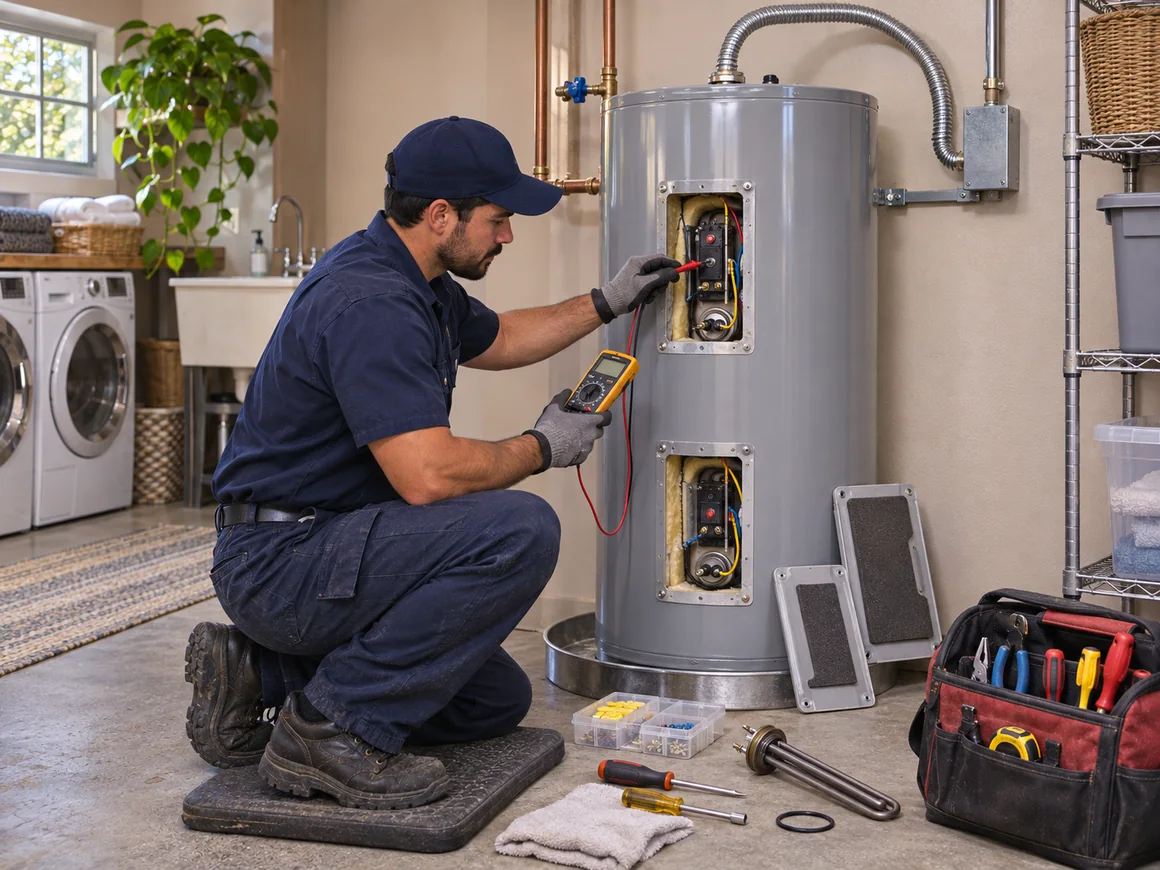
Electric tank models may leak near element gaskets or threaded connections. Water close to energized wiring or access panels raises an electrical hazard and requires professional isolation and inspection.

How Water Heater Leak Repair Works

The goal is to understand why water appears where it does, then discuss a repair that addresses that cause. A replacement recommendation should follow a confirmed reason, not a puddle alone.

1. Tell Us Where the Leak Is and Which City You Are In

Share the California city and ZIP, unit type, where you can safely see water and how long the leak has been noticed. A photo is optional only if it can be taken without approaching a hazard.

2. Inspect and Confirm the Actual Leak Source

The professional traces accessible connections, water paths and valve areas; checks relevant pressure, temperature or tank condition concerns; and establishes whether the tank itself is compromised.

3. Explain Repair or Replacement Options and Scope

You receive an explanation of the suspected failure, whether a component repair is suitable and what parts or other work may be required. The exact scope and cost depend on findings.

4. Complete the Agreed Work Where Repair Is Appropriate

When an accessible component can be repaired, the professional uses suitable procedures and parts. Availability of particular parts and equipment-specific work is confirmed with the team.

5. Check for Leaks and Review the Findings

After work that is completed, the service professional checks the repaired area as appropriate and explains any remaining concerns, observations or recommended follow-up.

Call with the leak location and heater type.

An accurate diagnosis may require an on-site inspection. Scheduling, final scope and charges are confirmed for your location.

Call About the Leak

What Affects Water Heater Leak Repair Costs in California?

There is no honest single price for all leaking water heaters. A serviceable external connection, pressure-relief problem and failed tank shell require fundamentally different decisions. Ask whether the proposed work repairs the identified valve or connection, or whether a confirmed tank-shell failure calls for a separate replacement quote.

External Fitting or Valve vs. Failed Storage Tank

A localized connector or drain-valve repair is a different job from removing a failed water heater. The source of leakage is one of the largest factors in the actual work required.

Equipment Type, Age and Parts Availability

Gas, electric and tankless heaters have different component layouts. Compatible replacement valves, seals or fittings, brand/model details and equipment condition affect labor and material choices.

Leak Location, Accessibility and Additional Plumbing Work

A connection in open view is easier to investigate than moisture originating behind a jacket, under equipment or inside a cramped enclosure. Nearby plumbing damage may change the scope.

Urgency, Local Conditions and Confirmed Work

Service address, availability and any additional work found at inspection can affect the final proposal. Discuss the scope and charges before approving work; no fixed statewide leak-repair price is assumed.

Ask whether the proposed charge includes diagnosis, required components, labor and any other plumbing work. A repair price cannot be confirmed from leak location alone.

How Can You Reduce the Risk of Future Water Heater Leaks?

Maintenance cannot prevent every failure, but addressing an actual leak cause and reviewing aging components helps avoid repeating the wrong fix.

Address the Cause of Relief-Valve Discharge

Repeated relief discharge can be related to pressure, thermal expansion or overheating. Simply replacing the valve without resolving an underlying problem may allow the symptom to continue.

Maintain Equipment and Visible Connections

Follow model-specific care instructions and discuss corrosion, deteriorated connectors or unusual moisture. See Water Heater Maintenance & Flushing for preventive service that differs from a leak repair.

Know When Replacement Is Safer Than Repeated Repair

When a storage tank shell has failed or serious deterioration is confirmed, continuing to patch nearby connections is not a substitute for addressing the compromised heater.

Why Choose Water Heater Repair CA for Water Heater Leak Repair?

A useful leak assessment should identify the actual source, explain the repair limits and avoid treating every puddle as a failed tank. Our service professionals focus on those distinctions. When choosing help for a leaking hot water heater, look for someone who distinguishes fitting and valve leaks from tank failure and explains safe next steps.

Licensed Plumbing Professionals

Licensed plumbing professionals assess water-side fittings, safety valves and tank condition before discussing a repair plan.

Insured Service Professionals

Service is performed by insured professionals, with the equipment and site conditions guiding the work scope.

Experience Diagnosing Water Heater Leaks

A puddle can come from different components. Our assessment approach distinguishes visible location from actual source.

Clear Repair-Versus-Replacement Guidance

We explain why a replaceable fitting differs from a leaking tank shell so you can understand the recommendation.

Attention to Safety and Equipment Condition

Hot water, pressure, fuel and electrical hazards influence whether the equipment is safe to access or service.

Residential and Commercial Water Heater Service

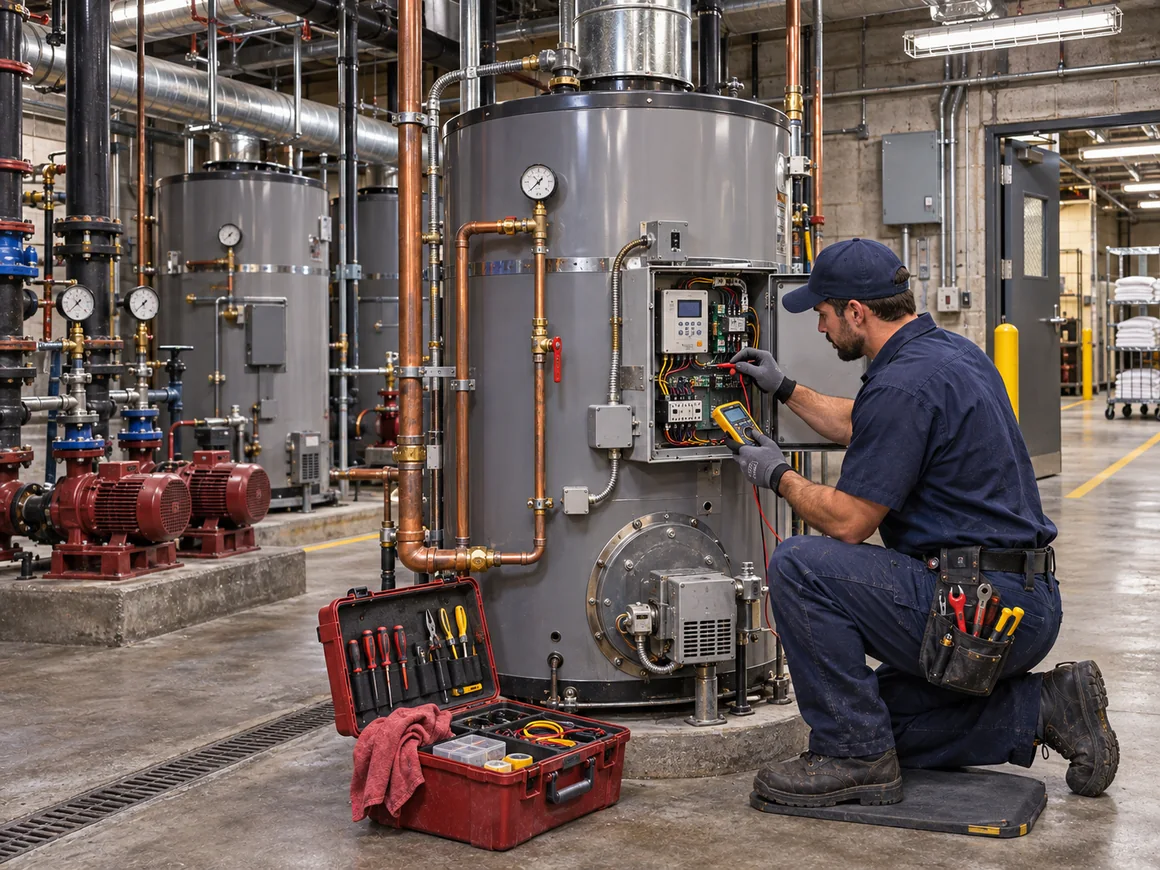
Homeowners, managers and businesses can discuss water heater leak concerns. Availability and equipment scope are confirmed for each address.

Water Heater Leak Repair Service Areas Across California

We help customers with leaking water heaters in covered California communities. Tell us the service address and ZIP code, where water is appearing and whether the heater is still operating.

Choose a featured California city to learn about local service coverage. A leak may come from a connection, relief valve, drain valve or the tank itself, so a professional inspection is the first step.

View All 190 California Locations

For active water leakage, avoid unsafe contact with electrical equipment and call to discuss the problem at your address.

Water Heater Leak Repair FAQs

These answers help you understand common leak symptoms and when a professional assessment matters. They cannot identify your specific fault without inspecting the equipment.

What should I do immediately if my water heater starts leaking?

Keep people away from hot water and any standing water near electricity. Do not touch unsafe equipment or dismantle the heater. If you smell gas or hear a carbon monoxide alarm, evacuate and call emergency services from a safe location. Otherwise, describe the visible water leak to a qualified professional.

Can a leaking water heater be repaired, or does it need replacing?

It depends on the source. A defective connector, drain valve or element gasket may be repairable. If the storage tank shell itself is confirmed to leak, replacement is generally required.

Why is my water heater leaking from the top?

The source may be a hot or cold water connection, flex line, threaded fitting or plumbing above the heater. Moisture can also travel before becoming visible. Diagnosis should verify the component rather than assume a tank failure.

Why is there water leaking from the bottom of my heater?

Possible causes include a drain valve, water tracking down from a higher fitting, condensation, nearby plumbing or a failed tank shell. Water in the pan alone does not tell you which condition is responsible. Water collecting at the base does not establish a tank-shell failure until the actual source has been located.

Why is my water heater pressure relief valve dripping?

A relief valve may discharge because of excessive pressure, thermal expansion, overheating or a valve problem. Leakage at the valve connection is different from discharge through the pipe. Do not cap the line; have the cause evaluated.

Is a leaking water heater drain valve repairable?

Sometimes. A serviceable drain valve can often be replaced, provided its connection and surrounding tank are sound. A qualified professional must assess the valve and safely manage the heater before any work.

Is water around the heater always a leak?

No. Condensation, an adjacent pipe or water traveling down the heater jacket can produce a puddle. Persistent moisture or corrosion still deserves inspection to confirm the real source.

Can a tankless water heater develop water leaks?

Yes. Inlet and outlet fittings, service connections, applicable condensate lines and internal components can leak. Internal heat-exchanger failures may require model-specific evaluation or replacement.

Is it safe to continue using a leaking water heater?

Do not assume so. Hot water, live electricity, gas equipment and pressure can all introduce hazards. Keep clear of unsafe conditions and ask a professional to assess the heater before continued use. Evacuate immediately for a suspected gas leak or carbon monoxide alarm.

What affects the cost of water heater leak repair in California?

The actual source, equipment type, accessibility, available replacement parts and whether nearby plumbing or the tank must be replaced all matter. The scope and charges should be confirmed for the specific heater and location.

Do you repair leaks on both gas and electric water heaters?

Water Heater Repair CA accepts inquiries about water leaks on gas and electric water heaters. The precise repair depends on the fault and equipment; fuel gas leaks and serious electrical hazards require the appropriate safety response and qualified evaluation.
Request Water Heater Leak Repair in California

Contact the team about a visible water leak and include the details you already know. Service availability, diagnosis and charges are confirmed for your specific equipment and location.

Call About a Leaking Water Heater

Tell our team where water appears, whether you have a storage tank or tankless unit, and your city and ZIP code. Never approach standing water near electrical equipment to gather details.

(800) 370-2296

We can discuss available service and the next step. A diagnosis and repair or replacement recommendation depend on the actual condition and source.

  • Water leaking at valves, fittings and connections
  • Drain-pan or floor moisture investigation
  • Repair-versus-replacement assessment
Natural-gas odor or carbon monoxide alarm? Evacuate immediately. Call 911 and the gas utility from a safe location; do not submit a routine service request first.

Find Your California City

Call for Water Heater Leak Repair

Online forms are currently unavailable. Booking is handled by phone. Call us to discuss your water heater problem and arrange service.
Call (800) 370-2296 to Book

No online request will be sent and no personal information is collected through this section. Read our Privacy Policy.

Call (800) 370-2296