California water heater repair, installation and replacementResidential and commercial service
Water Heater Repair CAWater heater service for California homes and businesses
Need help with a water heater?(800) 370-2296Call Our Team
COMMERCIAL EQUIPMENT · HOT-WATER LOSS · BUSINESS OPERATIONS

Commercial Water Heater Repair in California

When a business or multi-unit property loses hot water, the problem may involve the heater, its controls or the building's distribution system. Water Heater Repair CA provides commercial water heater repair assistance through licensed plumbing professionals in covered California communities. We assess inconsistent temperatures, leaking components, shutdowns and reduced hot-water output, then explain suitable next steps based on the equipment and fault. Call with your city, system type and operational concern. Same-day appointment availability can be checked for your business address, equipment and site-access requirements when you call.

Licensed plumbing professionals · Insured service professionals · Commercial water-heater experience

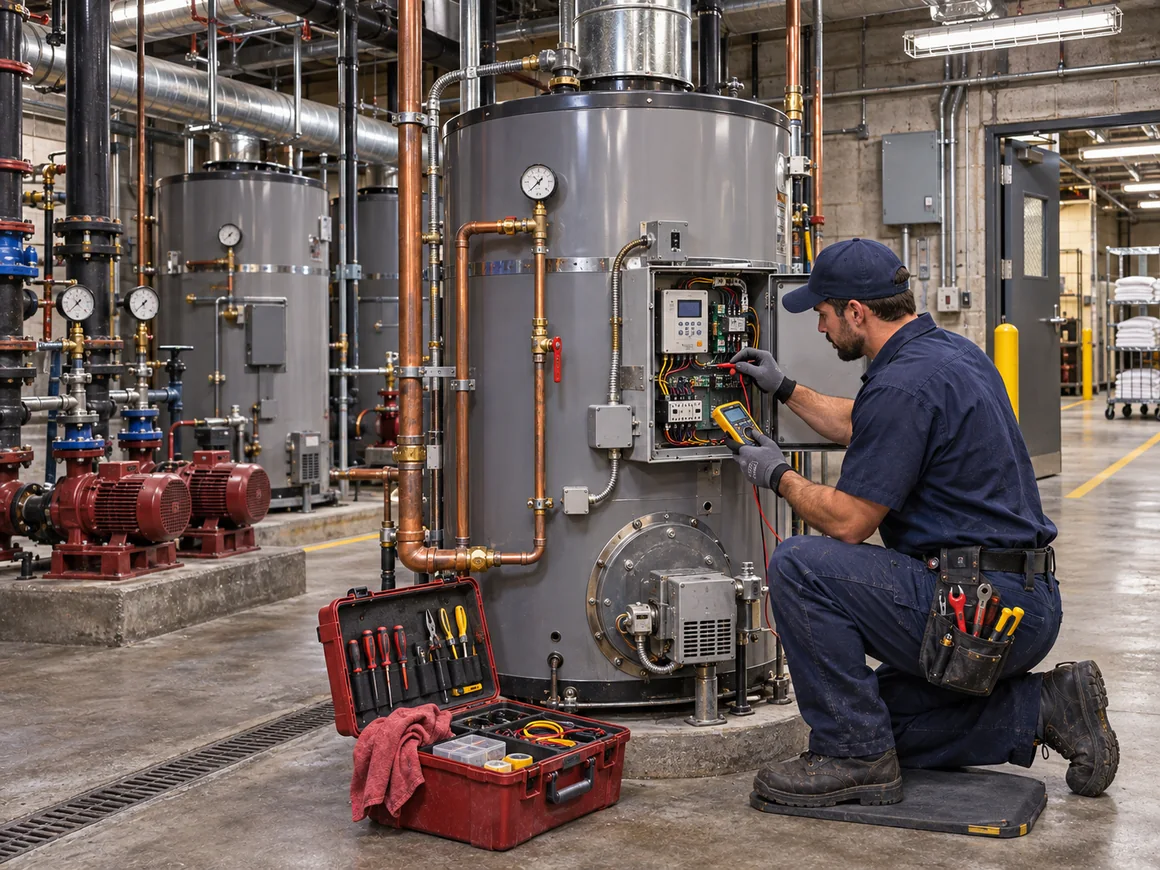
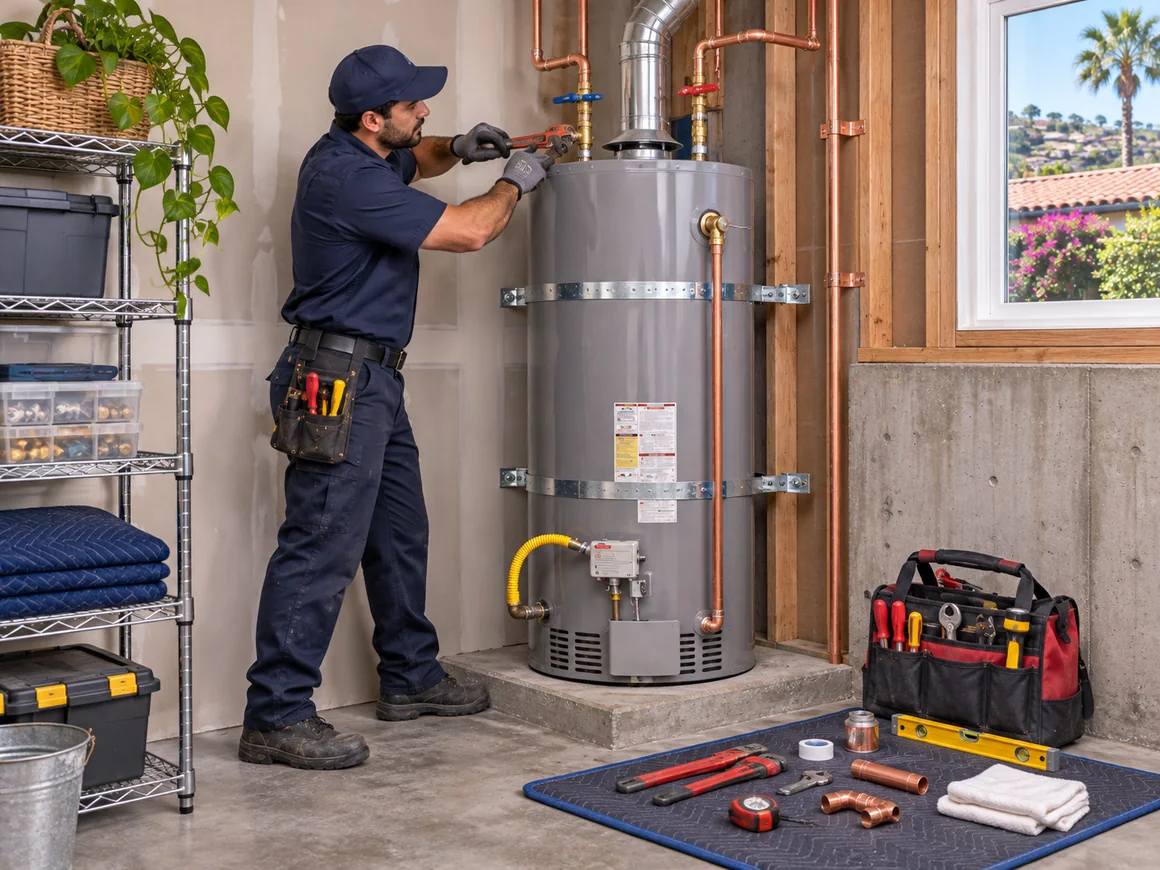
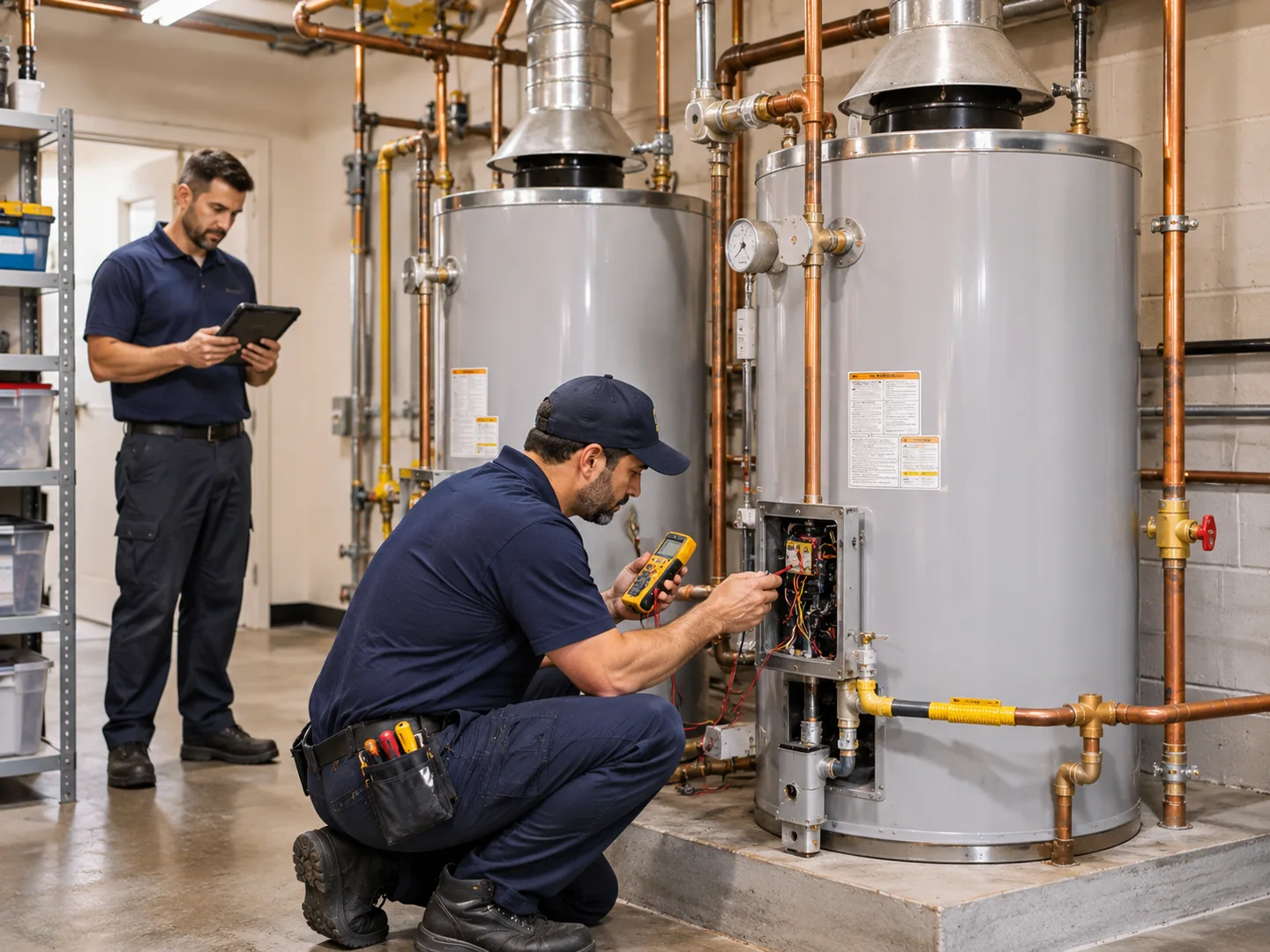
Technicians evaluating the controls of commercial storage water heaters in a mechanical room

Signs Your Commercial Water Heater Needs Repair

Commercial hot-water trouble often appears as an operating problem before the cause is clear. The symptoms below help your team describe what is happening without guessing which part has failed.

No Hot Water Across the Building or at Multiple Fixtures

An apartment-complex water heater breakdown or a building-wide outage can disrupt showers, cleaning and occupied spaces. Fuel or power supply, a locked-out heater, controls or a distribution fault may be involved. A qualified assessment establishes where the interruption begins before parts or system capacity are changed.

Inconsistent Water Temperature During Peak Use

Water may start hot and then cool while showers, sinks or other fixtures run together. The demand profile, recovery rate, mixing components and circulation all need consideration before a heater is blamed.

Slow Hot-Water Recovery or Reduced Output

After a busy period, the system may struggle to rebuild usable hot-water capacity. Degraded heating performance, scale, failed components or demand above available output are different problems with different remedies.

Water Leaks Around Tanks, Valves or Connections

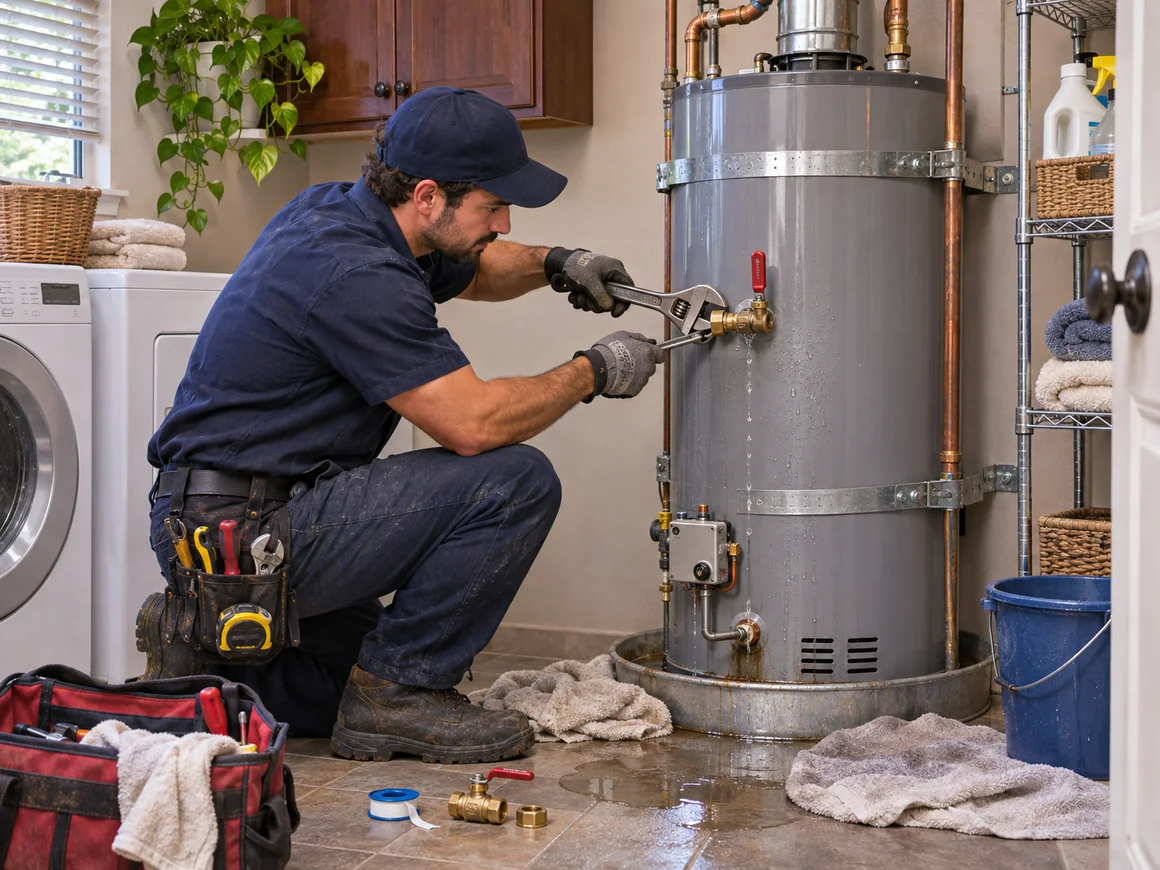
Water near equipment can come from external connections, relief discharge, nearby piping or the tank itself. The leak source should be traced before a repair or replacement is recommended. See Water Heater Leak Repair for a dedicated explanation.

System Lockouts, Fault Codes or Unexpected Shutdowns

Commercial controls may display faults, enter a protective lockout or cycle off unexpectedly. Record the displayed code if safely visible; do not repeatedly reset equipment or bypass a safety control.

Unusual Sounds, Corrosion or Relief-Valve Discharge

Rumbling, active corrosion and discharge at a safety outlet deserve attention. Their causes vary, from sediment and pressure conditions to component failure, and the severity cannot be determined from a photograph alone.

Commercial Hot-Water Problems Vary by Property Type

The same heater fault can affect a property very differently depending on occupancy, fixture use and when hot water is most important. Share the building type so the initial discussion reflects its operating needs.

Restaurants and Food-Service Operations

Kitchen sinks, sanitation processes and cleaning create concentrated demand. A hot-water disruption can affect scheduled preparation or service. Restaurant managers should follow applicable food-safety procedures while arranging equipment evaluation.

Hotels, Lodging and Hospitality Properties

Guest-room showers and laundry can overlap at busy times. Report whether the outage affects one wing or the whole property; that distinction can help separate central equipment problems from distribution concerns.

Apartments, Condominiums and Multi-Unit Properties

A central system serving many dwellings requires attention to the number of affected units, recirculation and accessibility. Owners and managers determine any necessary occupant notices and temporary arrangements.

Offices, Gyms and Other Commercial Facilities

Showers, wash stations and restrooms may have very different usage profiles. Note if the issue occurs throughout the day or mostly after concentrated use, and whether one fixture group is affected.

Healthcare and Other Sensitive Facilities: Scope Must Be Confirmed

Healthcare and other sensitive facilities may require additional contractor qualifications, strict access procedures and building-specific water-management practices. Share the equipment type and site requirements in advance so the team can confirm whether the requested repair is within the available service scope.

Commercial Water Heater Types and System Configurations

Commercial buildings use different combinations of water-heating equipment and piping. A useful repair assessment starts by identifying the actual system, not assuming every mechanical room is arranged the same way.

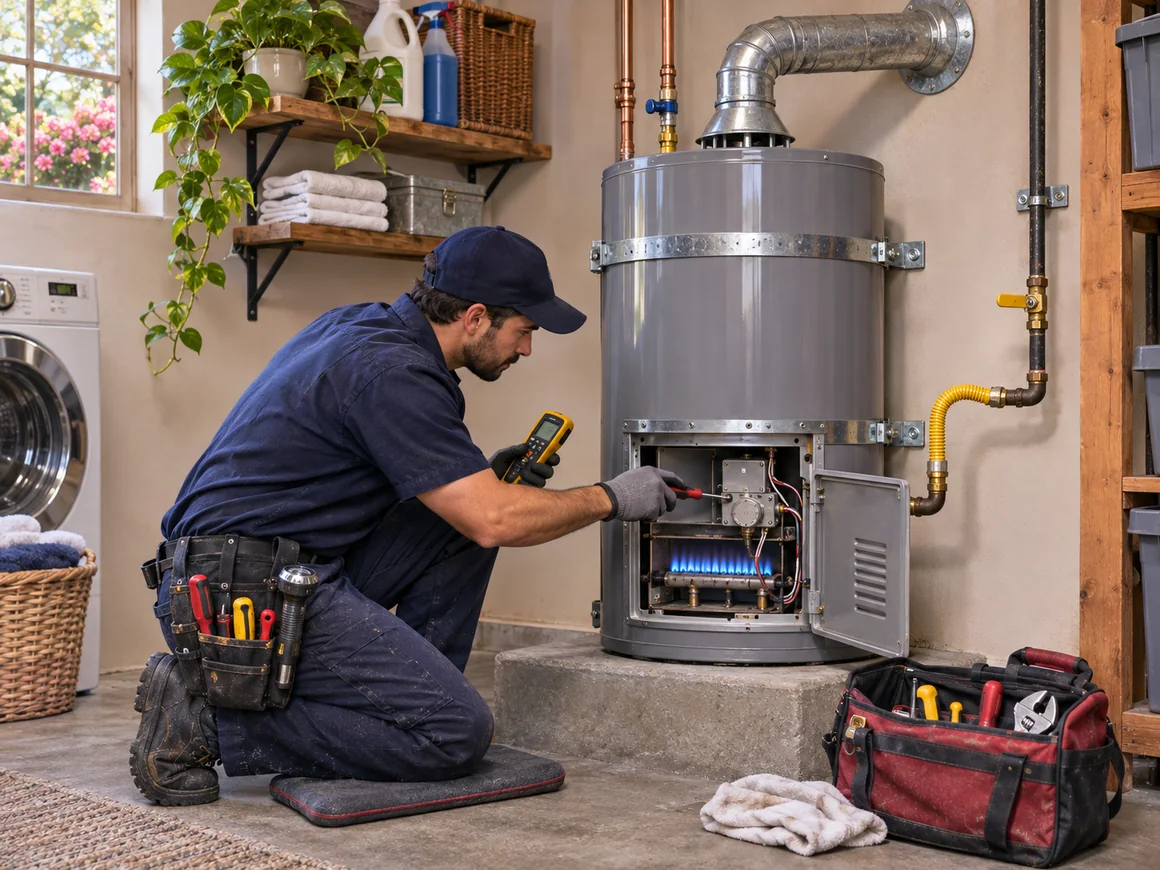
Commercial Gas Storage Water Heaters

Storage volume, burner output, gas controls, venting and recovery demand all affect performance. A gas heater that stops firing needs diagnosis by a qualified professional rather than repeated operator resets.

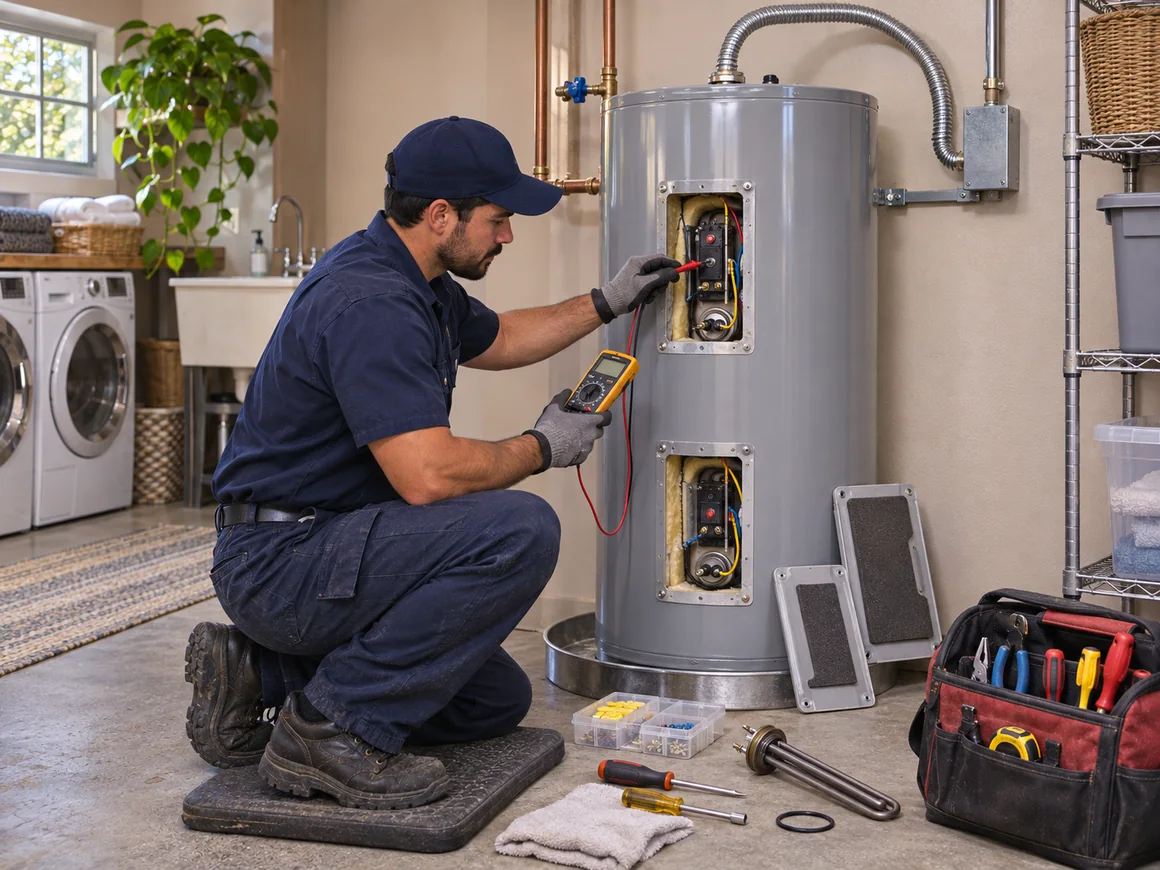
Commercial Electric Storage Water Heaters

Heating elements, thermostats, contactors, supply and controls can affect available hot water. Electrical testing and repairs belong to appropriately qualified professionals, never to building staff working on exposed energized parts.

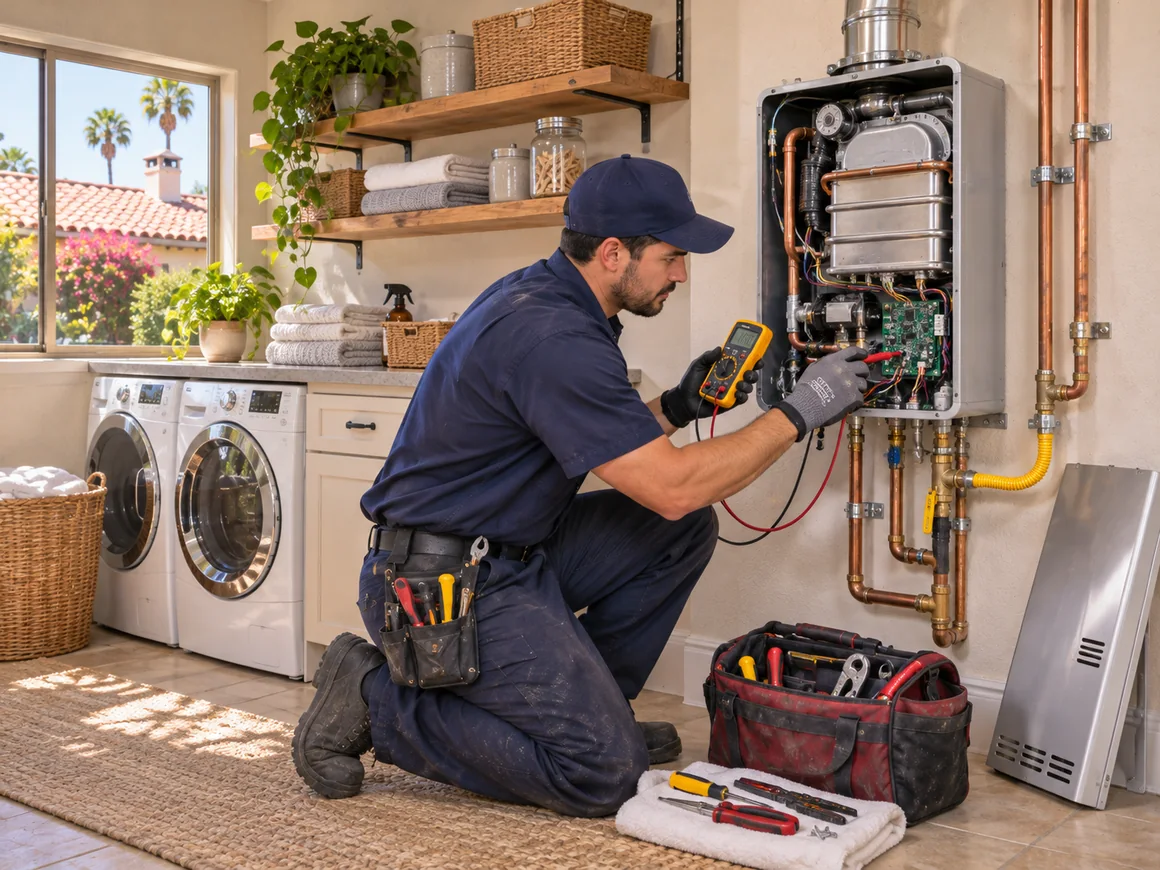
Commercial Tankless Water Heaters

On-demand equipment may report flow, ignition, sensor or exhaust-related errors. Large simultaneous usage and incoming-water temperature also matter. Tankless diagnostics may differ from storage-tank work.

Multiple-Unit and High-Demand Hot-Water Systems

Some facilities use more than one heater, staged operation or separate storage. Identify which units are active and whether failures are isolated. Specialized boilers and plant-level controls require scope confirmation before service is offered.

Recirculation and Temperature-Mixing Components

Pumps, return lines and mixing valves influence when and how hot water reaches fixtures. If heater output is adequate but taps remain cool, the issue may be outside the vessel itself.

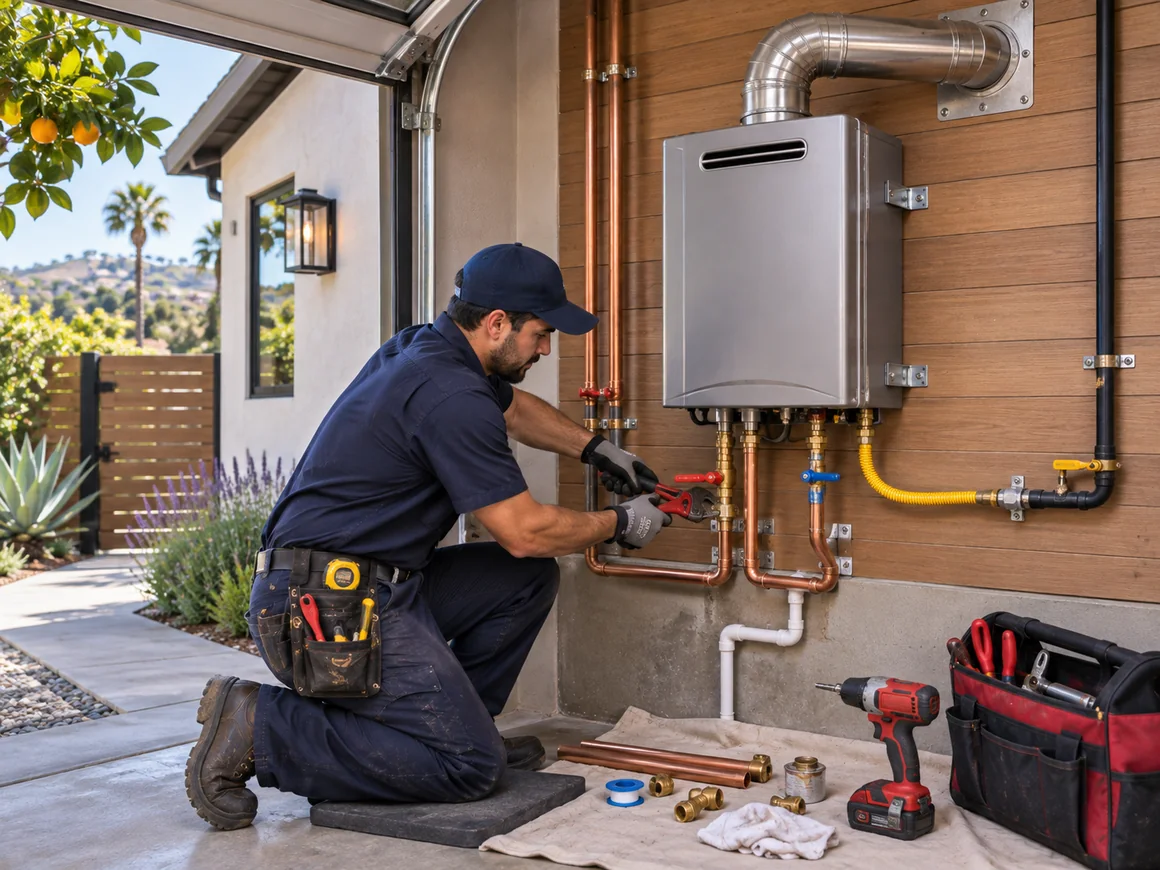
Commercial water heater equipment being evaluated by a service technician

What equipment information helps?

The make and model, available fuel type, number of heaters, any visible fault code and whether the complaint affects one or many fixtures provide a useful starting point. Photos are helpful only when they can be taken from a safe, accessible location.

Commercial Water Heater Problems We Diagnose and Repair

A repair recommendation should identify the failed part or operating condition, whether compatible components are available and whether the remaining equipment is suitable for continued service.

Burner, Ignition and Gas-Control Faults

If a gas-fired heater does not start or stay operating, its ignition, flame proving, combustion and fuel controls may need qualified evaluation. Do not alter gas trains or safety settings to restore heat.

Electric Heating Elements, Thermostats and Controls

Electric storage heaters can lose capacity when heating components or switching controls fail. Symptoms may resemble an undersized system; testing separates component failure from load-related limitations.

Sensors, Safety Shutoffs and Error Displays

A displayed code or protective shutdown is evidence, not a complete diagnosis. The underlying fault may be a sensor, an operating condition, blocked flow or a safety concern that needs correction before restarting.

Water Connections, Valves and Repairable Leaks

Accessible piping, drain fittings and valves may be serviceable if the adjacent equipment remains sound. A confirmed breach of the storage tank shell usually changes the recommendation toward replacement.

Sediment, Scale and Restricted Heat Transfer

Mineral buildup can reduce effective heat transfer and contribute to performance complaints. Cleaning must follow equipment design and condition; maintenance does not restore every damaged or failed part.

Venting, Exhaust and Combustion Concerns Where Applicable

Gas equipment depends on safe combustion and exhaust handling. Suspected venting or combustion faults require appropriate professional attention, and unsafe equipment should not be kept running for business continuity.

Is the Commercial Water Heater Faulty or Is the System Not Meeting Demand?

No hot water at the tap does not necessarily mean the tank or heat exchanger is broken. Testing both production and delivery avoids replacing equipment when a building-level fault or changed load is responsible. A heater that reaches its target temperature may still leave distant fixtures waiting for hot water if circulation or mixing components are not operating correctly.

1Heater outputIs the equipment producing sufficient hot water?
2Recovery / demandDoes available recovery match peak fixture use?
3DistributionAre recirculation and return paths working?
4Fixture deliveryAre mixing and point-of-use temperatures appropriate?

Peak Demand Versus Actual Recovery Capacity

A business may draw hot water faster than the equipment can heat new supply. Compare when outages occur, which fixtures run together and whether the heater is functioning at its expected output.

Recirculation Pumps, Return Lines and Hot-Water Delivery Delays

Long waits at distant fixtures can point to circulation or distribution trouble. An assessment should distinguish a cold outlet from inadequate stored or produced hot water at the equipment.

Mixing-Valve and Temperature-Control Problems

Blended-water components can affect delivered temperature even while stored water is adequately heated. These assemblies require careful evaluation because incorrect changes can create scalding or water-quality risks.

When Changes in Building Usage Expose Existing Limitations

Extra fixtures, extended operating hours or new tenants can expose capacity limits in an otherwise functioning system. Describe what changed before buying larger equipment or authorizing extensive repairs.

When Commercial Water Heater Problems Need Urgent Attention

An operational interruption may be time-sensitive, but some conditions are immediate safety hazards. Staff should follow facility procedures and keep unqualified people away from unsafe equipment.

Sudden Loss of Hot Water Affecting Operations

Tell the team which processes or occupants are affected and whether a complete outage or limited output is occurring. A service conversation can clarify availability without promising a particular response time.

Active Water Leakage or Flooding Near Equipment

Keep people clear of hot water, slippery floors and electrical hazards. Do not reach through standing water to operate equipment or switchgear. Notify appropriate building personnel.

Gas Odor, Combustion Concerns or Carbon Monoxide Alarms

Evacuate the affected area and contact emergency services or the gas utility from a safe location. Do not operate switches, reset equipment or use an ordinary contact form as the first response.

Unsafe Temperatures or Relief-Valve Discharge

Very hot fixture water and active relief discharge can pose burn hazards. Restrict unsafe access and have the operating condition assessed; never cap or obstruct a safety discharge line.

Safety first: For a suspected gas leak or carbon monoxide hazard, leave the area and contact emergency services. For an equipment malfunction without immediate danger, call to discuss service availability and the next step.

How Commercial Water Heater Repair Works

The process begins with the problem your facility is experiencing, then moves through a practical equipment and operating assessment. Work scope and scheduling depend on the system and fault.

1. Discuss the Building, Equipment and Fault Symptoms

Share the property type, California city, hot-water impact, number of heaters, model information and visible error codes. A description of when the problem began is often more useful than a guess about the broken component.

2. Assess the System, Safety Conditions and Hot-Water Demand

A qualified visit considers equipment condition and relevant operating or distribution factors. Checks depend on safe access, equipment design and the symptom reported.

3. Identify Repair Options and Explain the Proposed Scope

The findings determine whether a serviceable part, system adjustment by a qualified person, additional investigation or replacement assessment is appropriate. Any proposed work should be understood before authorization.

4. Complete Approved Repairs When Practical

Repair depends on safe conditions, parts suitability, access and the confirmed fault. Some failures require additional work or replacement rather than component substitution.

5. Check Performance and Review the Findings

When the work permits, relevant water-heating operation and observed results are reviewed. Facility operators should understand any outstanding issue or monitoring need.

Planning Commercial Water Heater Repairs Around Your Business

Access, operational impact and the responsible building contact matter as much as the fault description. Preparation helps make the first service conversation productive and reduces avoidable confusion.

Access to Mechanical Rooms, Equipment and Shutoffs

Know where the water-heating equipment is located and who can authorize safe access. Some mechanical spaces require building escorts or site-specific procedures; tell the team about these restrictions in advance.

Service Coordination with Owners or Facility Managers

Identify one person who can answer equipment questions, approve proposed work and communicate property rules. Sharing consistent details prevents conflicting instructions during a busy operating period.

When One Unit Serves Several Tenants or Work Areas

A central system can affect more than the person who called. Management determines required notices and contingency plans; repair staff should understand the building areas affected.

Explaining Possible Service Interruptions Before Work

Some testing or repairs require a controlled outage. Discuss the likely impact before authorizing service and avoid assuming work can occur without any interruption or during unconfirmed after-hours availability.

Have these details ready when you call

  • Property type and city or ZIP code
  • Heater make/model and number of units, if safely visible
  • Observed symptoms, fault codes and when they began
  • Fixtures or tenants affected and hours of peak demand
  • On-site contact, mechanical-room access and operating constraints

Should You Repair or Replace a Commercial Water Heater?

A commercial system should not be replaced simply because hot water is interrupted. The decision should follow a confirmed diagnosis, a review of equipment condition and an understanding of business demand.

When Component Repair May Restore Service

A serviceable control, sensor, heating component or fitting can sometimes be repaired without replacing the complete heater. The remaining equipment must still be safe and capable of meeting the expected load.

When Tank Damage or Repeated Failures Change the Decision

An irreparable tank breach, widespread deterioration or repeated shutdowns can make replacement a more suitable option. The recommendation should identify the evidence rather than rely on age alone.

Parts Availability, Equipment Condition and Downtime Risk

Compatible component availability and the potential for further interruption affect the practical choice. Operators should weigh a proposed repair against equipment condition and the cost of prolonged loss of hot water.

Evaluating Capacity Before Selecting a Replacement

If demand exceeds existing recovery capacity, a like-for-like replacement may preserve the same shortage. Any major equipment change calls for a proper assessment of the building and the applicable requirements.

Repair may fit when

The fault is isolated, components are compatible, remaining equipment is sound and useful output can be restored.

Replacement may fit when

The tank itself has failed, deterioration is extensive, or a repair would not resolve the building’s real hot-water needs.

Need to replace an existing heater?

See our Water Heater Replacement page for the general replacement process. Commercial equipment changes require confirmation of the specific scope and conditions.

Discuss Your Equipment

What Affects Commercial Water Heater Repair Costs in California?

Commercial repair costs depend on the type and number of heaters, the fault, mechanical-room access and any circulation or mixing components involved. A small part replacement and a multi-unit investigation require different work. Before authorizing work, clarify whether the proposed scope covers heater diagnostics, circulation checks, compatible parts and any follow-up visit.

Nature of the Fault and Diagnostic Complexity

Intermittent shutdowns, circulation complaints and widespread temperature problems can take different levels of investigation. A visible code is helpful but may not indicate a single faulty component.

Equipment Type, Size and Compatible Parts

Commercial gas, electric and tankless models use different controls and components. Equipment availability, manufacturer requirements and whether compatible parts exist can affect the scope.

Accessibility, Multiple Units and Associated Components

Restricted mechanical rooms, multiple heaters, tempering valves and circulation components can complicate access and fault isolation. These factors should be explained before additional work is approved.

Scheduling, Urgency and Approved Additional Work

Business constraints and site-specific timing can affect service planning. Confirm any applicable charges and written scope rather than assuming emergency rates, fixed pricing or included work.

Can Preventive Maintenance Reduce Repeat Commercial Water Heater Problems?

Maintenance can help identify deterioration, mineral buildup and operating changes, but it cannot make aging equipment failure-proof. The right tasks and interval depend on the model, use and water conditions.

Inspecting Storage Tanks, Valves and Connections

Periodic observation of external condition, fittings, relief arrangements and evidence of moisture may bring developing concerns to attention. Safety-device checks should follow manufacturer directions.

Model-Specific Flushing or Tankless Descaling

Sediment flushing for storage tanks differs from cleaning scale from a tankless heat exchanger. Frequency and method should follow unit guidance, water quality and present condition.

Monitoring Recirculation and Equipment Performance

Notice changes in outlet temperature, delivery delays and pump-related symptoms. Monitoring can show whether a repair held or whether related building components need separate attention.

Reviewing Maintenance Records and Manufacturer Guidance

Keep service dates, recorded faults and model information available for the next visit. Facility records can help reveal recurring failures without implying that every site needs an identical service schedule.

California Requirements for Commercial Water Heating Systems

Commercial repairs, alterations and replacements are not always governed by the same requirements. Codes, equipment standards and approvals can depend on the work, occupancy and local jurisdiction.

Applicable Codes for Commercial Repair, Alteration or Replacement

California’s 2025 Energy Code is in effect for applicable projects with permit applications from January 1, 2026. Whether a specific repair triggers a particular alteration provision depends on its scope; do not assume routine component repair requires complete system replacement.

Local Permits, Inspections and Equipment Changes

The city or county authority having jurisdiction determines applicable permits and inspections for the planned work. A like-for-like component repair and a new or materially altered water-heating system may have different review requirements.

Temperature Controls, Scald Prevention and Building Water Management

Commercial water systems must balance occupant scald risks with water-quality concerns. Building operators should follow their own water-management plan and applicable health and plumbing requirements rather than rely on a universal thermostat setting.

Manufacturer Requirements and Qualified Service Work

Fuel systems, electrical components and safety controls require appropriate qualifications and model-specific instructions. Some specialized equipment or high-risk occupancies may require additional contractors or expertise beyond a standard water-heater repair visit.

Technical references: California Energy Commission, 2025 Energy Code; CDC, Monitoring Building Water. Building-wide water-quality testing and water-management planning are separate specialties; property operators should use appropriately qualified providers for those tasks.

Why Choose Water Heater Repair CA for Commercial Water Heater Repair?

Commercial callers need clear answers about the equipment, its likely operating impact and the next sensible repair decision. These are the service principles we apply when discussing a commercial water-heater concern. When comparing commercial hot water heater repair providers, ask about experience with your system type, licensed work, insurance and how the service will be coordinated around building access.

Licensed Plumbing Professionals

Water-heater work is handled by licensed plumbing professionals. The appropriate work and any additional trade qualifications depend on the equipment and fault.

Insured Service Professionals

The professionals delivering the covered service are insured. Ask about the service arrangement and site requirements when coordinating access.

Commercial Water-Heater Service Experience

Experience with commercial water-heating needs helps frame questions about multiple fixtures, peak demand and operating interruptions instead of treating every call like a single-family home.

Diagnosis Before Repair Recommendations

A lack of hot water does not automatically prove the heater vessel has failed. The repair path should follow symptom checks and findings appropriate to the system.

Clear Scope and Repair-or-Replacement Options

The practical goal is to explain what is serviceable and when equipment condition changes the decision. Proposed next steps depend on confirmed faults and parts availability.

Consideration for Business Operating Needs

Building hours, access and the number of people affected inform service planning. Scheduling and potential interruptions are discussed rather than universally promised away.

Commercial Water Heater Repair Service Areas Across California

We serve covered California communities from major metro areas to smaller cities. Select your city homepage to review area coverage. Service availability for your equipment and property type is confirmed when you contact the team.

View All California Locations

Frequently Asked Questions About Commercial Water Heater Repair

These answers help California business owners and facility managers describe their situation. They cannot replace an on-site diagnosis or the building operator’s safety procedures.

Why is my commercial water heater not producing hot water?

Possible causes include power or fuel issues, failed heating components, control lockouts or a building delivery problem. Check how many fixtures are affected and share any safely visible fault code with the service team; the exact cause requires assessment.

Why does our building run out of hot water during busy periods?

Simultaneous use may exceed the system’s recovery capacity, or circulation and mixing components may limit delivered hot water. The heater can be functioning yet undersized for present demand, so the load and delivery path both matter.

Can a leaking commercial water heater be repaired?

External valves, connectors and some piping can sometimes be repaired. A confirmed breach in a storage-tank shell generally requires heater replacement. The location of water on the floor alone does not prove which part failed.

Do you repair commercial gas and electric water heaters?

Our commercial water-heater service scope includes assessment of gas and electric hot-water equipment. The particular make, size, fault and required qualifications determine the work that can be offered; equipment coverage is confirmed before scheduling.

Can a commercial tankless water heater be repaired?

Many tankless faults involve serviceable controls, sensors, valves or flow-related conditions, but some require replacement or specialist attention. Share the make, model and displayed error code. Read more about Tankless Water Heater Repair.

Can recirculation problems cause delayed or uneven hot water?

Yes. A recirculation pump or its associated return piping can affect delivery at distant taps even when the heater is producing hot water. Qualified assessment distinguishes distribution faults from insufficient heater output.

How do I know whether a commercial heater should be repaired or replaced?

A decision depends on the diagnosed fault, tank integrity, equipment condition, parts availability, business interruption risk and current hot-water demand. A replacement of similar capacity may not solve a demand problem.

What should a facility manager provide when requesting repair?

Provide the California city, building type, contact and access details, number of heaters, make/model if known, fault codes, affected fixtures and how operations are impacted. Do not enter unsafe areas to gather information. If multiple tenants or fixtures are affected, explain whether the problem occurs everywhere or only at distant taps; that distinction helps guide the assessment.

What affects commercial water heater repair costs in California?

Diagnostic complexity, heater type, part compatibility, mechanical-room access, multiple units, associated piping or controls and the authorized scope of work can all affect cost. A site-specific assessment is needed for a meaningful estimate.

How long does commercial water heater repair usually take?

There is no dependable universal duration. The fault, access, compatible parts and whether related building equipment needs attention influence the work and timing. Available scheduling is discussed for the specific request.

What should we do if the commercial heater fails unexpectedly?

Keep people away from unsafe hot water or equipment and follow facility procedures for outages. If there is a gas odor or carbon monoxide alarm, evacuate and call emergency services or the gas utility from safety. For non-emergency faults, call to discuss an assessment.

Do California commercial water-heater repairs require permits?

Permit requirements depend on the exact repair, alteration or replacement and the city or county authority having jurisdiction. Do not assume that a minor component repair and replacement of the entire commercial system are treated identically.
Request Commercial Water Heater Repair in California

Tell us what is happening to your building’s hot-water system and where the equipment is located. Include the unit type and operational impact if known. Diagnosis, work scope, cost and scheduling are confirmed for the actual property and system.

Talk Through Your Commercial Hot-Water Problem

Share the property type, equipment you have, which areas are affected and how long the issue has been present. We can discuss covered service availability and the next practical step.

(800) 370-2296
  • Gas, electric and tankless hot-water equipment
  • Loss of heat, leaks and control faults
  • Repair-first assessment and replacement decisions
Immediate hazard? Evacuate for suspected gas leaks or carbon monoxide alarms and call emergency services from a safe place.

Browse California city coverage

Call for Commercial Water Heater Repair

Online forms are currently unavailable. Booking is handled by phone. Call us to discuss your water heater problem and arrange service.
Call (800) 370-2296 to Book

No online request will be sent and no personal information is collected through this section. Read our Privacy Policy.

Call (800) 370-2296