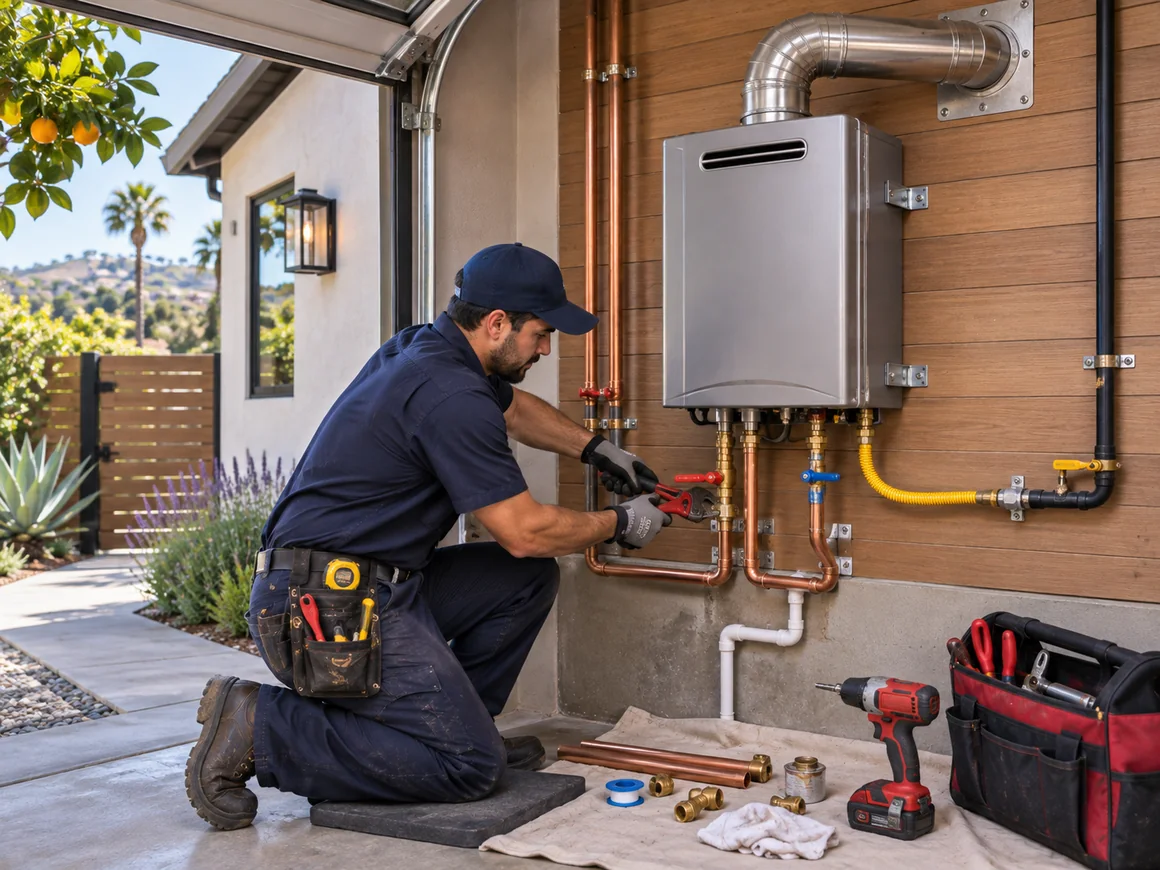
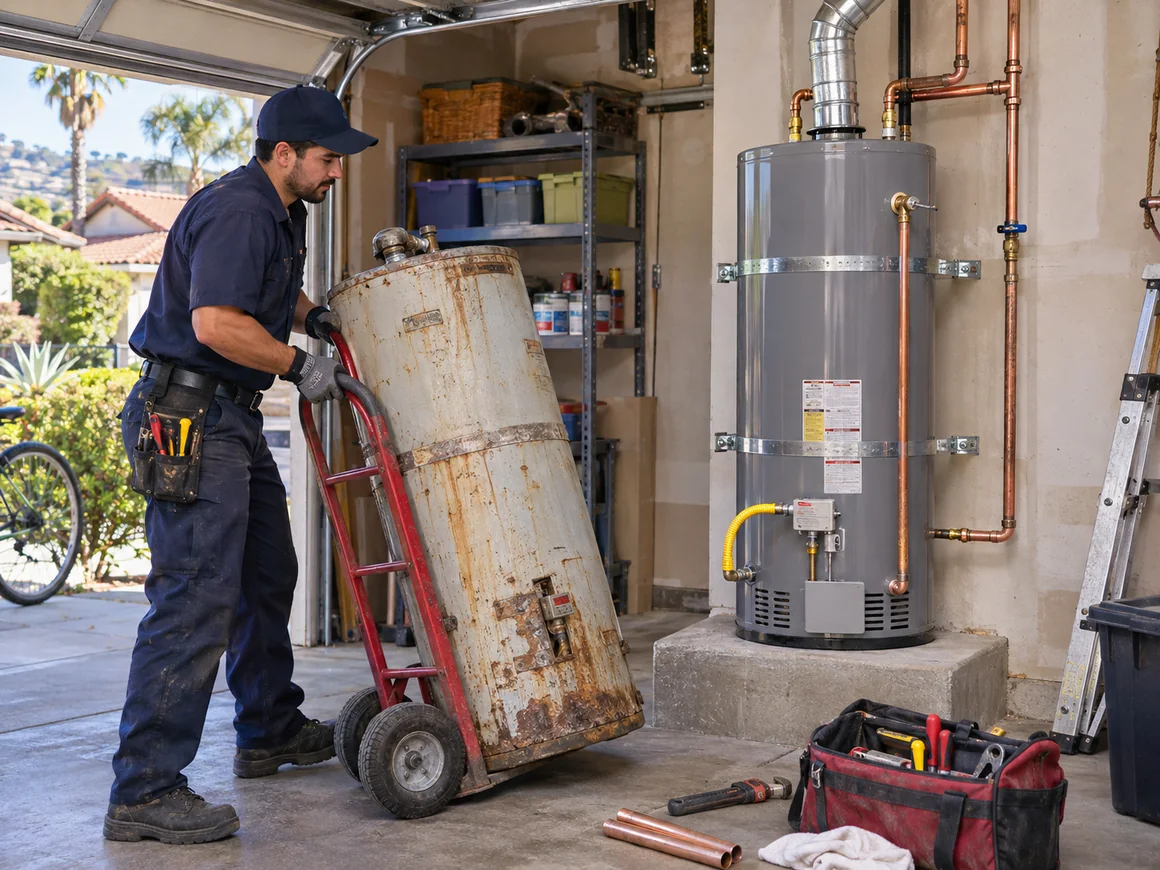
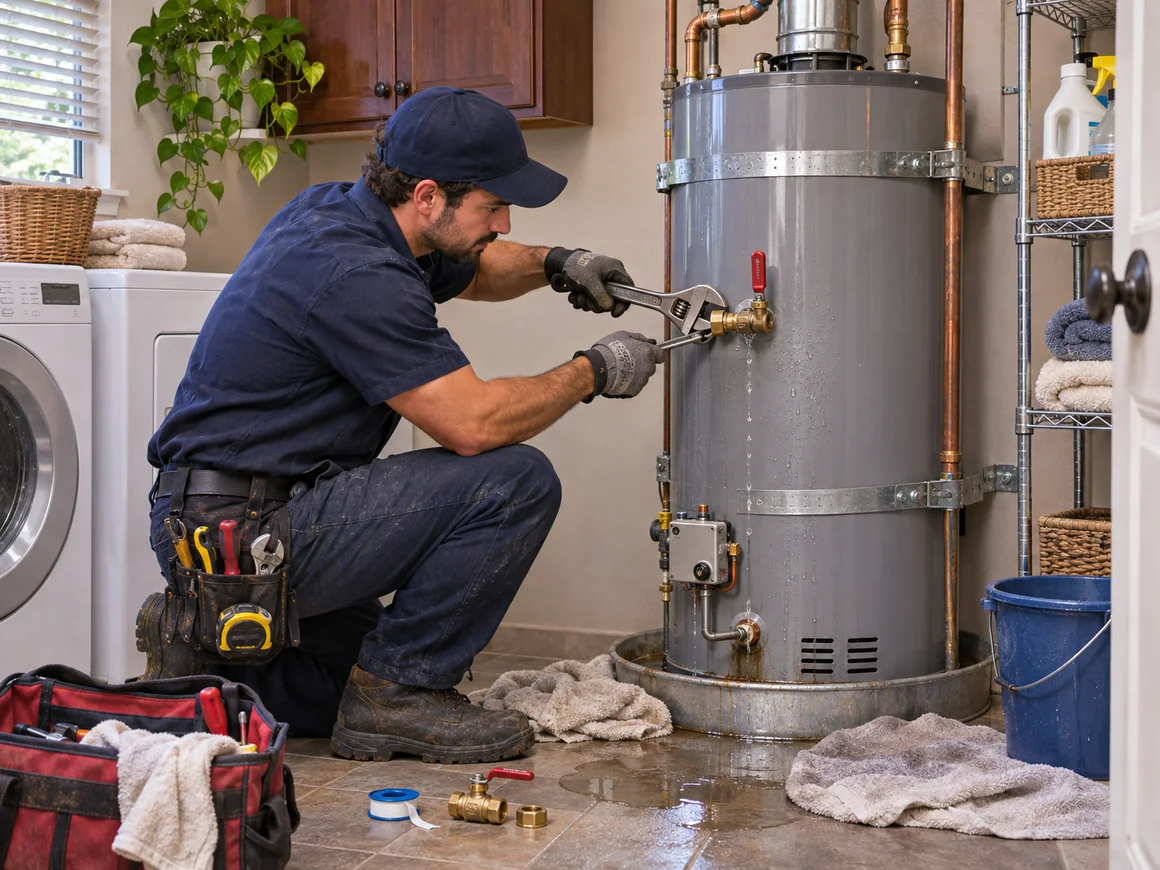
California water heater repair, installation and replacementResidential and commercial service
Water Heater Repair CAWater heater service for California homes and businesses
Need help with a water heater?(800) 370-2296Call Our Team
GAS STORAGE HEATERS · PILOT LIGHTS · BURNER AND CONTROL FAULTS

Gas Water Heater Repair in California

When a gas water heater stops heating, the pilot keeps going out or the burner will not start, the cause needs more than a guess. Water Heater Repair CA helps homeowners and businesses in covered California communities arrange gas water heater diagnosis and repair with licensed plumbing professionals and insured service professionals. We address gas storage heater ignition problems, temperature complaints, control faults and related issues, with equipment safety first. Tell us your city and what the heater is doing. Same-day gas water heater repair appointments may be available for ordinary service issues, subject to your address and the current schedule; suspected gas leaks require emergency response instead.

Licensed plumbing professionals · Insured service professionals · Gas storage heater diagnosis

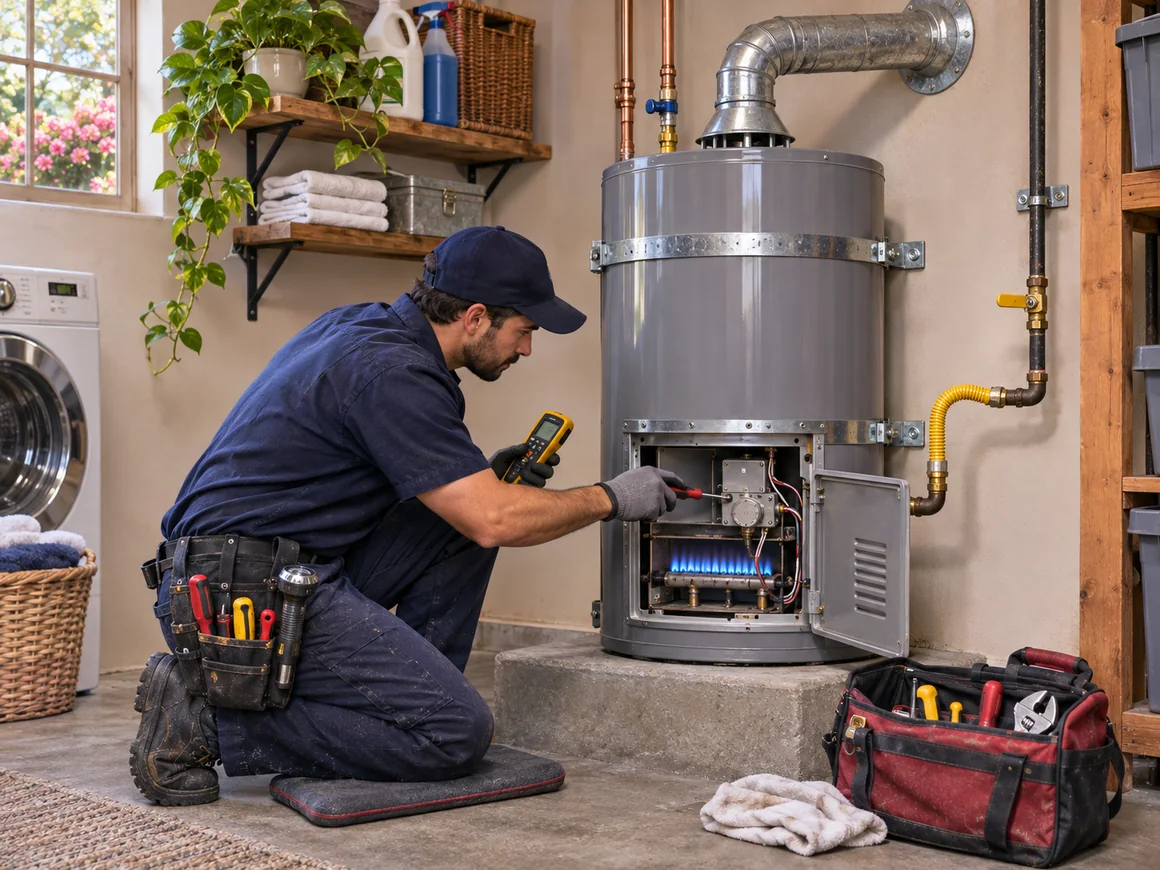
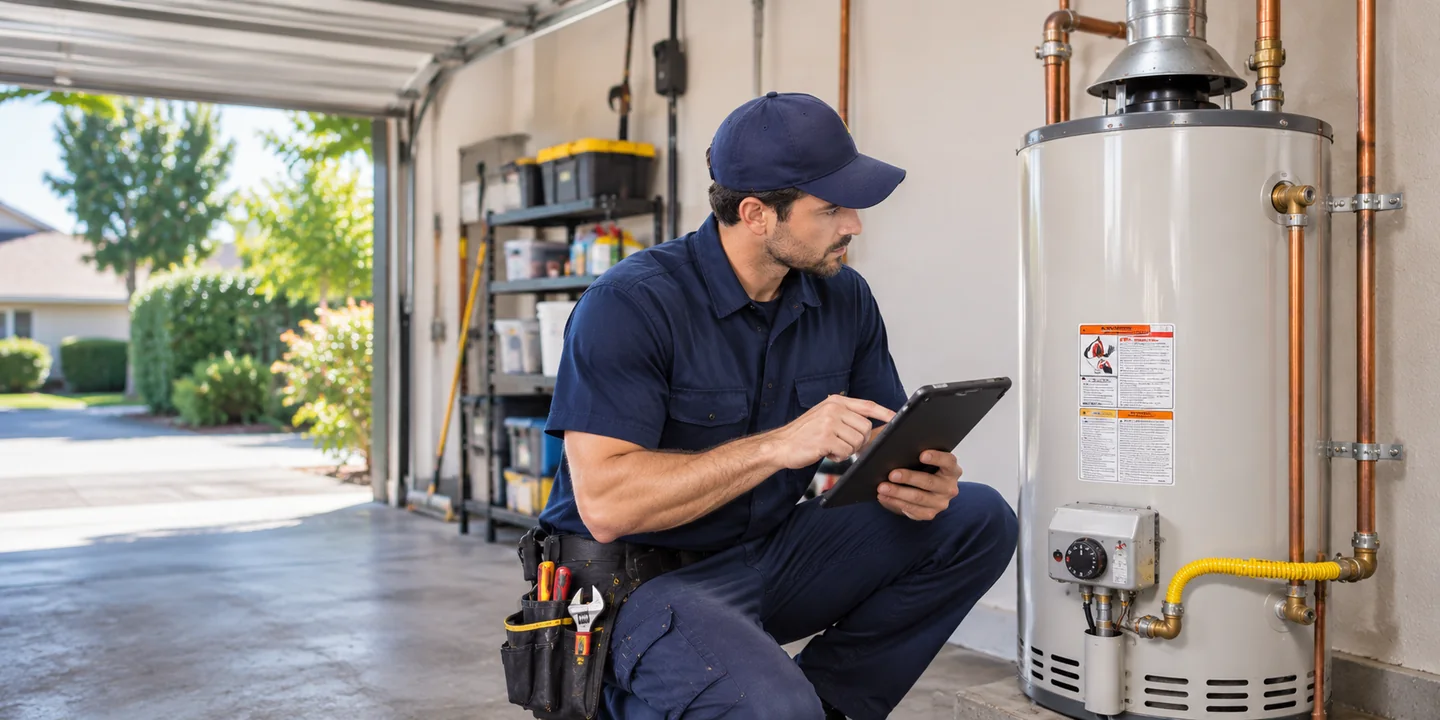
Technician reviewing controls beside a residential gas storage water heater in a garage

What to Do If You Smell Gas or Suspect a Carbon Monoxide Problem

A gas odor or carbon monoxide warning is an emergency, not an ordinary hot-water repair request. Follow emergency guidance before calling a repair company.

If You Smell Gas or Hear Hissing Near an Appliance

Leave the area immediately and help others move to safety. Do not operate light switches, phones, flashlights, appliances or vehicles near the suspected leak. From a safe distance, call 911 and your local gas utility. Do not return until responders say it is safe.

If a Carbon Monoxide Alarm Sounds or People Have Symptoms

Move everyone to fresh air and call 911 from a safe location. Carbon monoxide has no smell; headache, nausea, dizziness and confusion can be warning signs. Do not silence a warning and continue using the appliance.

Gas Odor Versus a No-Hot-Water Complaint

A heater that simply is not producing hot water, without signs of an immediate hazard, may need a scheduled professional diagnosis. A gas smell, suspected exhaust failure or CO alarm changes the situation to emergency action.

Emergency guidance: If you suspect a gas leak or CO exposure, evacuate and call 911 from a safe location. Do not use this website contact form to report an active hazard. PG&E gas safety guidance and CDC carbon monoxide information explain these precautions. Local utility contacts may differ across California.

Common Signs Your Gas Water Heater Needs Repair

A symptom helps locate the problem, but it does not identify the failed part by itself. These are common reasons customers request gas storage water heater service.

No Hot Water from a Gas Water Heater

Hot taps stay cold even though the water supply is normal. A pilot or ignition problem, control shutdown, burner fault or gas supply issue may be involved. A qualified technician checks the applicable system before recommending a component.

Pilot Light Keeps Going Out

The pilot may fail to remain lit or the status indicator may show an interruption. Causes vary by model and can include flame sensing, combustion conditions or controls; it is not automatically a bad thermocouple.

Burner Will Not Ignite or Heater Shuts Down

The pilot may be present while the main burner does not operate, or the heater may shut down after starting. Gas controls and protective devices require model-specific assessment, not repeated resets.

Water Is Not Hot Enough or Temperature Fluctuates

Water may arrive lukewarm or vary between fixtures. Control performance, water-side conditions, mixing and demand can all affect delivered temperature.

Hot Water Runs Out Faster Than Expected

The usable hot-water supply may be reduced by a heating fault, sediment, changing household demand or a heater that no longer fits the building’s needs.

Popping, Rumbling or Unusual Operation Noises

Noises may develop as sediment accumulates or when heating and combustion conditions change. Noise alone is not a precise diagnosis, particularly with older equipment.

Water Leaking from Connections or Around the Heater

Moisture near the tank could come from a fitting, valve, condensation, nearby plumbing or a failed tank shell. The source must be identified before choosing repair or replacement.

Visible Soot, Unusual Combustion or Venting Concerns

Soot, scorching or unusual exhaust conditions can indicate a safety concern. Stop using affected equipment and arrange qualified assessment; if gas or CO danger is suspected, evacuate and call emergency services.

Why Does a Gas Water Heater Pilot Light Go Out?

A pilot outage is a symptom, not a confirmed parts diagnosis. The type of ignition and flame-sensing equipment depends on the specific gas water heater. A gas hot water heater that repeatedly loses its pilot may have a protective control operating as designed; bypassing a safety device is not an acceptable repair.

Pilot Flame Will Not Light or Stay Lit

Possible explanations include pilot assembly problems, fuel interruption, flame-sensing trouble, air conditions or a safety shutdown. A technician should identify which applies before replacing a part.

Thermocouple, Thermopile and Flame-Sensing Issues

Some older storage heaters use thermocouples; others use thermopiles or different flame-proving devices. The heater make and model determine which components exist and how they are assessed.

Electronic Ignition and Igniter Faults on Applicable Models

Some gas storage heaters use powered ignition and diagnostic controls rather than a continuously burning pilot. The displayed indicator or fault code can help identify what needs professional evaluation.

When a Safety Shutdown Requires Professional Inspection

A protective shutdown may be responding to an unsafe or abnormal condition. Bypassing a device or repeatedly resetting the system without finding the reason can make a hazardous condition worse.

Gas Water Heater Burner and Temperature Control Problems

An ignition or heating complaint can involve several connected systems. Qualified troubleshooting should distinguish a failure to start the burner from an issue with actual stored or delivered water temperature.

Burner Fails to Fire or Heats Inconsistently

A pilot can appear normal while the main burner fails to operate. The burner assembly, gas supply, ignition and controls may each require appropriate testing. Visible flame alone does not establish that combustion is safe.

Gas Control Valve and Thermostat Problems

The control system regulates heating and gas operation. Faulty controls may cause no heat, unexpected shutdowns or inconsistent output. Replacement is only appropriate when a compatible part and diagnosis support it.

High-Limit Switches and Other Safety Controls

Protective devices can stop operation when the system detects a condition outside its intended limits. A qualified professional looks for the underlying reason instead of bypassing a switch.

Low Hot-Water Output: Heater Fault or Demand Issue?

Insufficient usable hot water may come from poor burner recovery, mixing, sediment or simultaneous fixture demand. If the heater itself is sound but undersized, replacement planning is a separate service decision.

Gas Water Heater Venting and Combustion Safety

Gas-burning appliances must safely remove combustion products. Water getting hot does not, by itself, prove the exhaust or combustion-air arrangement is safe.

Why Safe Exhaust Venting Matters

Conventional, power-vent and direct-vent gas water heaters can use different exhaust arrangements. The vent must suit the appliance and its installation, and any suspected defect calls for professional evaluation.

Combustion Air, Blockages and Draft Problems

Restricted combustion air, obstructed vents or venting defects can affect operation and safety. Do not modify vents, covers or combustion openings to test a theory yourself.

Sooting, Odors and Other Warning Signs

Unusual soot, scorching or changes in combustion appearance need qualified attention. If there is a gas odor, CO alarm or possible exposure, follow the emergency instructions above immediately.

Why a Working Burner Does Not Rule Out Safety Problems

A heater may produce warm water while a combustion or venting hazard exists. Only proper equipment-specific inspection can assess relevant safety conditions.

Important: Do not use a gas appliance that may be venting improperly. For a carbon monoxide alarm or suspected gas leak, evacuate and call 911 from a safe location.

Which Types of Gas Water Heaters Need Different Repairs?

The term gas water heater covers more than one equipment design. Before requesting a specific component repair, identify the equipment type from its label if it is safely accessible.

Conventional Atmospheric-Vent Gas Storage Heaters

These common tank heaters store heated water and typically use an atmospheric combustion and draft-vent arrangement. Pilot, burner, control and vent issues are assessed according to the equipment design.

Power-Vent or Direct-Vent Gas Storage Heaters

Depending on the model, fans, pressure proving, electronic controls and sealed or specialized vent arrangements affect diagnosis. The system’s components determine the appropriate qualified service.

Natural Gas and Propane Equipment

The appliance fuel rating matters. Natural gas and propane systems are not interchangeable by assumption, and fuel-specific work and availability must be confirmed before scheduling. Do not attempt a fuel conversion yourself.

Gas Tankless Water Heater Problems

Tankless models have on-demand heat exchangers and flow-related controls that call for a different service focus. For faults on those systems, see our dedicated Tankless Water Heater Repair page.

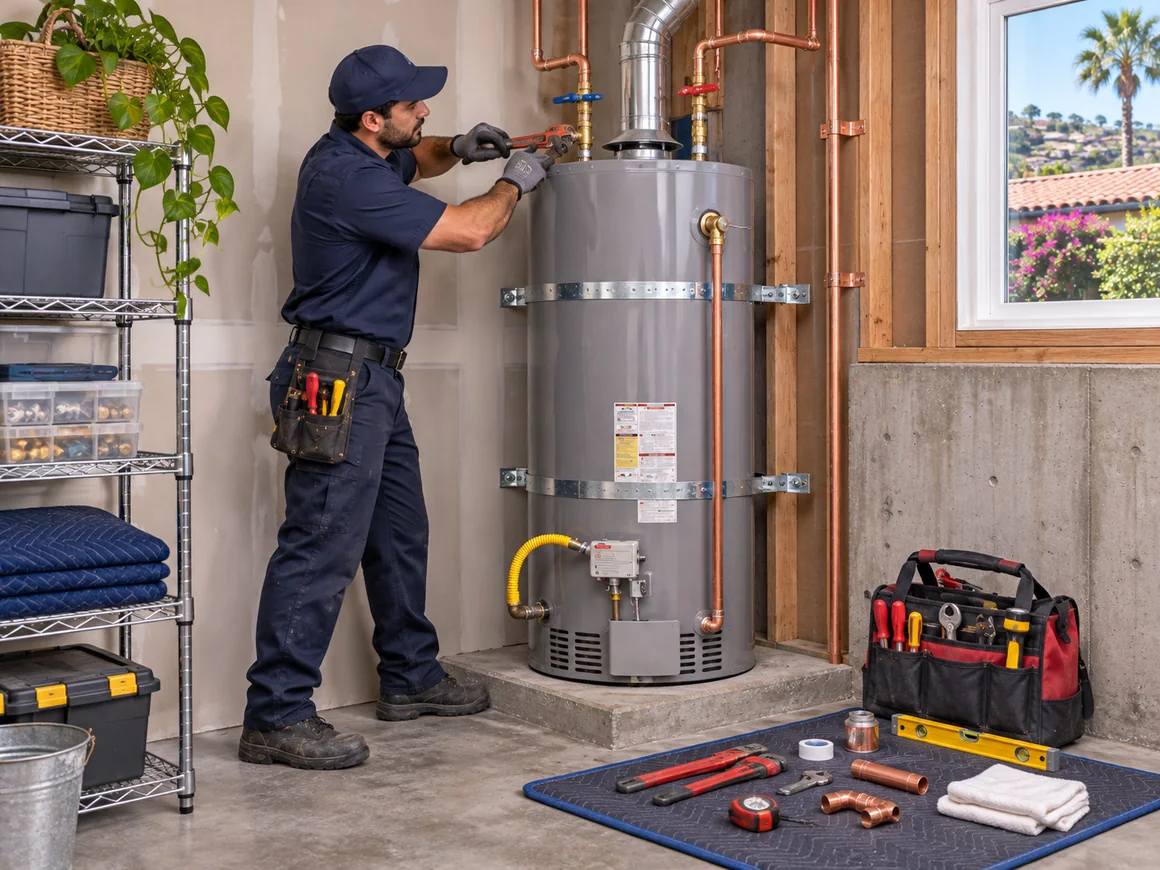
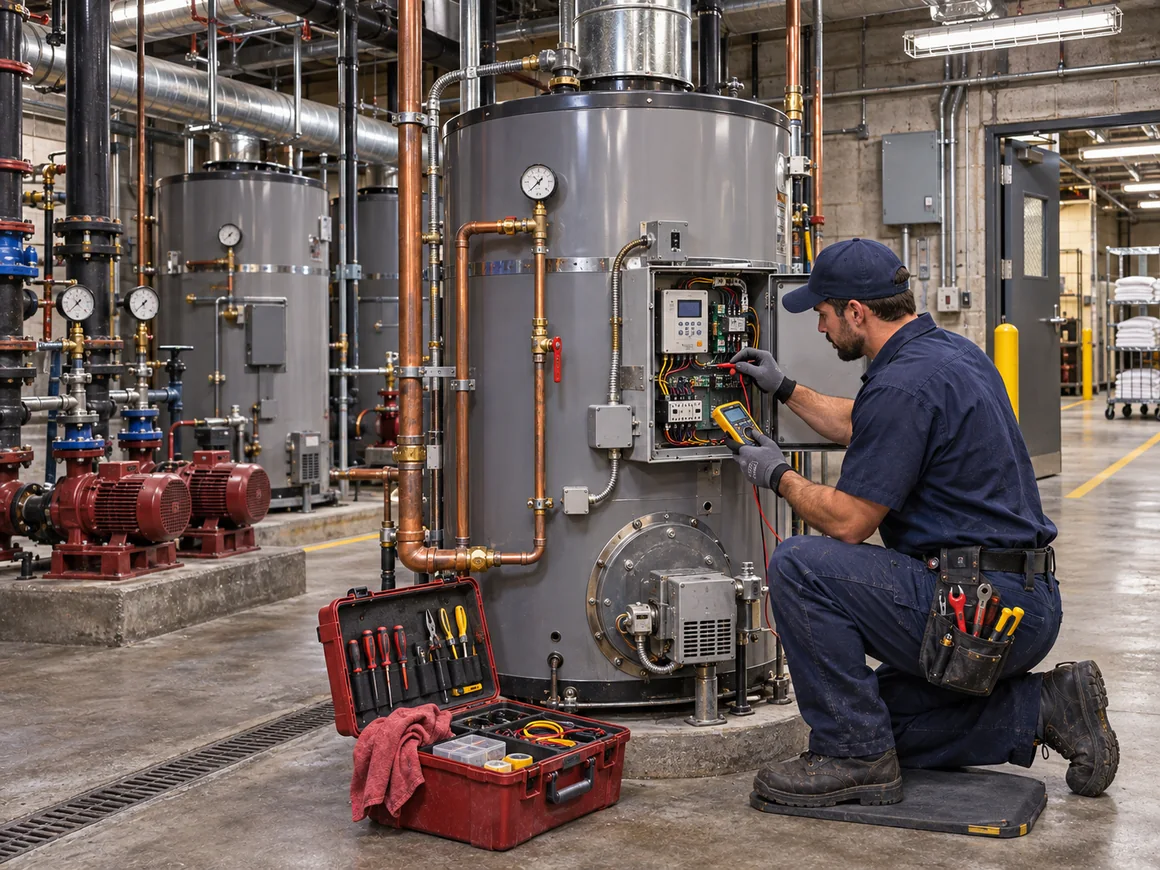
Professional technician attending gas-fired water heater equipment

Unsure which gas heater you have?

If safe to access, share the brand, model number and whether there is a storage tank. A technician can determine the applicable ignition system and service requirements. You do not need to remove a cover or open a combustion compartment to identify your problem.

Is Water Around Your Gas Heater a Repairable Leak?

Water on the floor is a water-leak problem, not necessarily a natural-gas leak. Its location does not, by itself, prove that the tank has failed.

Supply Fittings, Drain Valves and External Connections

Leaks from a water connection, drain valve or serviceable external part may be repairable if the heater is otherwise sound. The source should be traced before recommending work.

T&P Valve Discharge and Pressure Problems

The temperature-and-pressure relief valve is a safety device. Recurring discharge may indicate temperature, pressure, expansion or valve issues. Never plug, cap or redirect its discharge unsafely.

Condensation Versus Tank-Shell Leakage

Condensation and nearby piping can leave water near a heater. A confirmed breach in the storage-tank shell usually means the heater must be replaced rather than patched.

For a confirmed failed storage tank, review Water Heater Replacement. For an actual gas odor, follow the emergency safety guidance in Section 02, not water-leak troubleshooting.

How Professional Gas Water Heater Repair Works

The right work follows confirmed symptoms, equipment conditions and safe access. A meaningful assessment comes before recommending a part or replacement.

1. Tell Us Your Symptoms, Heater Type and Service City

Share the California city, whether the unit is a gas storage tank, the type of hot-water problem and the model or indicator code if safely visible. Mention any unusual odor or safety concern before normal booking.

2. Assess the Gas Heater and Applicable Safety Conditions

Relevant professional checks may involve ignition, flame sensing, controls, burner operation, exhaust pathways, water-side performance and the observed fault. Safe access and equipment design guide the scope.

3. Explain the Cause, Options and Proposed Scope

Findings should distinguish a serviceable fault from tank failure, equipment limitations or an unsafe condition. Appropriate repair options and costs can then be discussed before work is authorized.

4. Complete the Agreed Repair Where Appropriate

Work depends on confirmed faults, compatible parts, qualified professionals and suitable safety conditions. Some equipment requires replacement or additional specialist evaluation instead.

5. Check Operation and Explain the Findings

After applicable work, operating behavior and relevant safety conditions are reviewed and the customer is told what was found, what was done and what concerns remain.

Should You Repair or Replace Your Gas Water Heater?

Replacing a whole heater is not the automatic answer to a pilot problem or cold water. But repairing a control component is not appropriate when the storage vessel itself has failed.

Repair may be appropriate

  • A confirmed, serviceable ignition or flame-sensing component fault
  • A model-compatible control, valve or external connection issue
  • Acceptable tank condition and suitable equipment for current demand
  • Repair scope and part availability make sense for the heater

Replacement may be necessary

  • A confirmed leak through the storage-tank shell
  • Serious safety damage or repeated significant failures
  • Unavailable critical parts or poor remaining equipment condition
  • Size or recovery performance no longer meets actual demand

Equipment Condition and Repeat Failures

Consider the heater condition, documented service history, tank integrity and whether the same fault has returned. Age alone cannot confirm that a particular component is beyond repair.

Questions Before Approving Replacement

Ask what failed, whether the diagnosis is confirmed, what compatible repairs exist, which safety issues apply and whether the proposed replacement meets current hot-water demand.

Gas Water Heater Repair Cost Factors in California

Gas water-heater repair cost depends on the confirmed fault, compatible parts, access and any safety-related work required. A pilot-light problem alone does not establish which component needs attention. Ask whether the proposed scope includes checking gas controls and any applicable venting concern, rather than assuming every no-heat complaint needs the same part.

Diagnosis and Source of the Fault

One no-hot-water complaint could involve ignition, controls, gas supply, water delivery or a safety shutdown. The actual fault determines whether the work is straightforward or involves further investigation.

Part Type, Model Compatibility and Availability

A serviceable sensor, control assembly or burner-related component can differ in price and availability by model. The correct replacement part matters more than an assumed generic item.

Heater Location, Access and Necessary Safety Work

Access restrictions, venting concerns and additional work needed for safe operation can influence the proposal. Faulty or unsafe equipment may require a different scope than the original request.

Urgency, Service City and Authorized Work Scope

Travel, equipment location, safe working conditions, compatible parts and scheduling can affect logistics. The service team should explain the planned work and pricing for the actual property.

Maintenance That Supports Safe Gas Water Heater Operation

Proper maintenance supports equipment performance, but it cannot substitute for diagnosing a failed gas control, an unsafe vent or a leaking tank.

Manufacturer-Recommended Inspections and Service

Use the instructions for the exact model and have gas-related service completed by an appropriately qualified professional. Guidance differs between atmospheric, power-vent and other heaters.

Sediment, Corrosion and Water-Side Maintenance

Sediment can affect heat transfer and noise, and corrosion can signal deterioration. Storage tank draining or flushing must fit the equipment condition and manufacturer directions.

Venting and Combustion System Awareness

Be alert to unusual soot, smell or operating changes. Have the combustion and exhaust arrangement professionally examined rather than altering vents or safety devices yourself.

When Maintenance Is Not a Substitute for Repair

If the pilot repeatedly fails, safety controls trip or the tank leaks, basic flushing will not repair the root problem. Report the symptoms and request a professional assessment.

California Requirements for Gas Water Heater Service

Qualified service must consider the appliance, the authorized work and the local authority having jurisdiction. California-wide rules do not make every component repair equivalent to a full replacement.

Qualified Plumbing Professionals and Gas Appliance Work

California CSLB describes gas appliances, water heaters, flues, connections and relevant maintenance within its C-36 plumbing classification. The professionals performing work must hold qualifications appropriate to the job.

Repairs Versus Replacement or Alteration

A serviceable-component repair may be treated differently from replacing a water heater or making a regulated alteration. Energy Code requirements and permit questions depend on the exact scope of work.

Local Permits, Venting and Inspections When Applicable

Cities and counties administer local requirements. Permit and inspection needs must be checked for the actual repair, alteration, venting work or replacement; no single city’s rules apply statewide.

Manufacturer Instructions and Equipment Compatibility

Safe component selection and service procedures rely on the specific water heater model. Gas controls and safety devices should never be bypassed or modified as an improvised fix.

Official guidance: California CSLB C-36 plumbing classification · California Energy Commission Energy Code.

Why Choose Water Heater Repair CA for Gas Water Heater Repair?

A gas water heater needs careful assessment and clear answers, especially when the symptom involves combustion or a protective shutdown. These are the standards our service is built around. When comparing gas heater repair providers, prioritize suitable licensed work, insured professionals, combustion safety and a clear explanation of the diagnosed fault.

Licensed Plumbing Professionals

Qualified plumbing professionals handle relevant water-heater and gas-appliance service instead of assuming every problem can be solved by a basic part swap.

Insured Service Professionals

Service is performed by insured professionals, giving customers a clear basis for discussing the work and the party carrying it out.

Gas-Water-Heater-Focused Diagnosis

Pilot assemblies, gas controls, burners, vent systems and tank performance are considered according to the actual heater design and symptom.

Attention to Combustion and Equipment Safety

Safety concerns take priority over getting a unit running at any cost. We do not recommend bypassing safety devices or operating equipment with a suspected hazard.

Clear Repair and Replacement Options

The service discussion should explain which fault is suspected or confirmed, what is repairable and when equipment condition points toward replacement.

Residential and Commercial Water Heater Experience

Water-heating work covers homes as well as appropriate commercial situations, with equipment type and service availability confirmed for the request.

Gas Water Heater Repair Service Areas in California

We provide gas storage water heater service in covered California communities. Select a city homepage to review its local coverage, then contact us to confirm availability and the equipment type. Do not assume every city has identical scheduling or propane coverage.

View All California Locations

Frequently Asked Questions About Gas Water Heater Repair

These answers clarify common gas heater concerns, but a description of symptoms cannot replace safe, model-specific diagnosis.

Why does my gas water heater pilot light keep going out?

A pilot can go out because of flame sensing, pilot assembly, fuel supply, air conditions or a safety shutdown. The model and actual diagnostic findings determine the cause; a failed thermocouple should not be assumed. Because safety controls may be involved, repeated relighting or bypassing a shutoff is not a substitute for diagnosis.

Why is my gas water heater not producing hot water?

Possible causes include an unlit pilot, ignition or burner problems, control failure, supply interruption or insufficient recovery. A professional checks the applicable equipment and whether the water-side system is delivering heat.

What causes a gas water heater burner not to light?

Burner operation depends on model-specific ignition, fuel controls and safety systems. Several faults can produce the same symptom. Do not bypass controls or repeatedly force the unit to operate.

Can a gas water heater thermocouple or thermopile be replaced?

On models fitted with these devices, some diagnosed failures are serviceable using compatible parts. Not every gas heater has the same flame-sensing components; a qualified technician should identify the system first.

Can a faulty gas control valve be repaired or replaced?

Some gas controls can be replaced as an approved assembly, depending on the model, confirmed fault and parts availability. Gas-control service needs qualified assessment; do not disassemble or adjust it yourself.

Why does my gas water heater shut off unexpectedly?

A shutdown may result from a protective control, ignition problem, fuel interruption or another operating fault. The safe next step is to determine why it stopped, not to keep resetting it.

Is it safe to use a gas water heater if I smell gas?

No. Leave the area immediately, avoid potential ignition sources and call 911 and your local gas utility from a safe location. Do not use the ordinary repair form or continue operating the heater.

Can a blocked vent cause gas water heater problems?

Yes. Restricted or incorrect venting can interfere with safe combustion and exhaust removal. A suspected venting defect requires qualified assessment. A working burner does not prove the vent is safe.

Why does my gas water heater run out of hot water quickly?

High simultaneous demand, reduced recovery, sediment, mixing issues or a heating-system fault can reduce available hot water. Diagnosis should separate equipment failure from a capacity problem.

When should I repair or replace a gas water heater?

Repair can make sense for a confirmed serviceable component fault when the tank remains sound. A leaking tank shell, severe deterioration, critical part shortage or unsuitable capacity may support replacement.

What affects the cost of gas water heater repair in California?

The exact fault, model, compatible replacement parts, site access, safety-related work and authorized service scope affect cost. A reliable price requires details about the actual heater and complaint.

What if my heater uses propane rather than natural gas?

Tell the service team before scheduling. Propane equipment has fuel-specific requirements, and a heater or component must match its listed fuel type. Propane repair availability is confirmed case by case, not assumed statewide.
Request Gas Water Heater Repair in California

For non-emergency problems, describe your gas storage heater and its symptoms. We can discuss covered service locations and the next practical step. Repairs and availability depend on the actual unit and fault.

Talk Through Your Gas Water Heater Problem

Tell us whether the unit uses a pilot or electronic ignition, what the heater is doing and the California city where service is needed. Safe, model-specific diagnosis comes before any recommendation.

(800) 370-2296
  • Gas storage water heater ignition and burner complaints
  • Qualified assessment of controls and operating conditions
  • Clear repair-versus-replacement guidance
Gas smell or CO alarm? Leave the area and call 911 from a safe location. Do not submit an ordinary repair request for an active emergency.

Browse California city coverage

Call for Gas Water Heater Repair

Online forms are currently unavailable. Booking is handled by phone. Call us to discuss your water heater problem and arrange service.
Call (800) 370-2296 to Book

No online request will be sent and no personal information is collected through this section. Read our Privacy Policy.

Call (800) 370-2296